

Why Are Flower Growers Switching to Ultrafiltration for Irrigation Water Management
2026-02-28
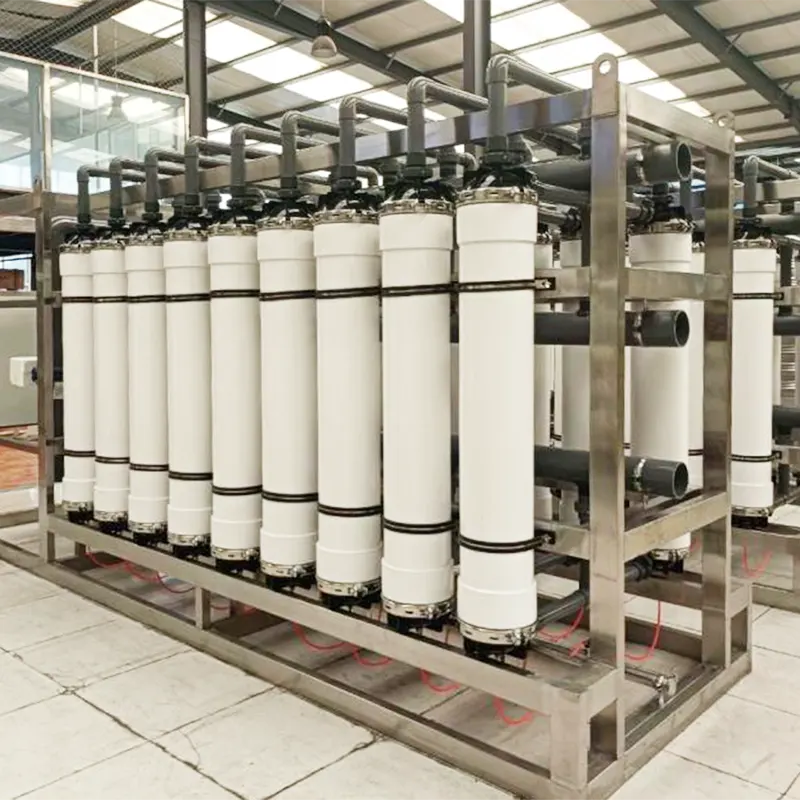
Across the commercial floriculture industry, irrigation water quality is the single most critical factor influencing crop yield and petal quality. Recently, there has been a significant shift away from traditional sand filters and chemical treatments toward advanced membrane technology. Flower growers are switching to Ultrafiltration Equipment For Flower Cultivation because it provides a physical barrier against waterborne pathogens, ensuring that every drop reaching the root zone is microscopically pure.
Industry leaders like Wuxi Jingbo have pioneered systems that remove suspended solids, bacteria, and viruses without altering the essential mineral content of the water. This precision allows growers to maintain healthy plants while drastically reducing the risk of root rot and fungal outbreaks.
Key Advantages Driving the Transition
The decision to adopt this technology is not merely about filtration; it is about total crop management. Below is a comparison of traditional methods versus modern Ultrafiltration Equipment For Flower Cultivation.
| Feature | Traditional Sand Filtration | Ultrafiltration Equipment |
|---|---|---|
| Pathogen Removal | Limited (down to 20-40 microns) | High (down to 0.01 microns) |
| Water Wastage | High backwash requirements | Low, efficient backwash cycles |
| Consistency | Variable based on pressure | Stable regardless of incoming turbidity |
| Labor Needs | Frequent monitoring and cleaning | Automated, minimal intervention |
The Impact on Flower Health and Yield
Implementing Wuxi Jingbo systems has shown a direct correlation with improved stem strength and bloom size. Because the water is free from clogging agents, fertilizers and nutrients can be delivered more efficiently through drip irrigation lines. This precision fertigation is impossible when using unfiltered or poorly filtered water that constantly blocks emitters.
Furthermore, by eliminating pathogens at the source, growers report a significant reduction in the use of pesticides and fungicides. This not only lowers operational costs but also aligns with the growing consumer demand for sustainably grown flowers.
Addressing Common Grower Concerns
FAQ: Ultrafiltration Equipment For Flower Cultivation
What specific contaminants does ultrafiltration remove that affect flower growth?
Ultrafiltration systems utilize hollow fiber membranes with pore sizes typically around 0.01 to 0.05 microns. This level of filtration effectively removes all suspended solids, colloidal clays, algae, and most critically, bacterial pathogens like Erwinia and fungal spores such as Pythium and Phytophthora. These microorganisms are invisible to the naked eye but are responsible for devastating crop losses in nurseries and greenhouses. By removing them at the irrigation source, Ultrafiltration Equipment For Flower Cultivation creates a sterile environment for the root system, promoting vigorous and healthy growth.
Is ultrafiltration equipment suitable for small-scale or boutique flower farms, or is it only for large operations?
While large commercial greenhouses benefit immensely from high-flow industrial units, manufacturers like Wuxi Jingbo offer a range of skid-mounted and compact systems specifically designed for smaller operations. These units are modular and can be scaled according to the specific water demand. For a boutique farm growing high-value cut flowers like roses or peonies, the investment in an ultrafiltration system pays for itself by preventing crop failure and extending the vase life of the final product. It is a versatile technology adaptable to any scale.
How does ultrafiltration handle varying water sources, such as river water versus borehole water?
This is one of the strongest advantages of the technology. Ultrafiltration Equipment For Flower Cultivation is highly tolerant of fluctuating feed water quality. If a grower relies on surface water (rivers or ponds) which can become turbid after rain, a sand filter might clog immediately. An ultrafiltration system, however, can handle these spikes in turbidity and consistently produce high-quality filtrate. For borehole water, which may contain high levels of iron or manganese, ultrafiltration acts as a crucial pre-treatment step for reverse osmosis or ensures that the water is safe for direct irrigation without staining the flowers or foliage.
Make the Switch Today
The shift toward precision irrigation is undeniable. To remain competitive in the global flower market, investing in reliable water treatment is no longer optional—it is essential. If you are ready to protect your crops and maximize your yield with reliable Ultrafiltration Equipment For Flower Cultivation, look no further than the advanced solutions offered by Wuxi Jingbo.
Contact us today to discuss your specific water requirements and discover how our filtration technology can transform your flower cultivation business.