

What Is the Difference Between Pressure Compensating and Turbulent Flow Drippers
2026-01-23
Choosing the right dripper is fundamental to an efficient and healthy irrigation system. Two of the most common and effective types are Pressure Compensating (PC) Drippers and Turbulent Flow Drippers. Understanding their distinct operational principles is key to selecting the perfect component for your landscape or farm. At MMIP, we specialize in providing the precise irrigation technology you need to maximize yield and conserve water.
The core difference lies in how they manage water pressure. Pressure Compensating Drippers are engineered with an internal flexible diaphragm or membrane that automatically adjusts the flow path. This mechanism ensures a near-constant, predetermined flow rate (e.g., 2.0 GPH) across a wide range of inlet pressures.
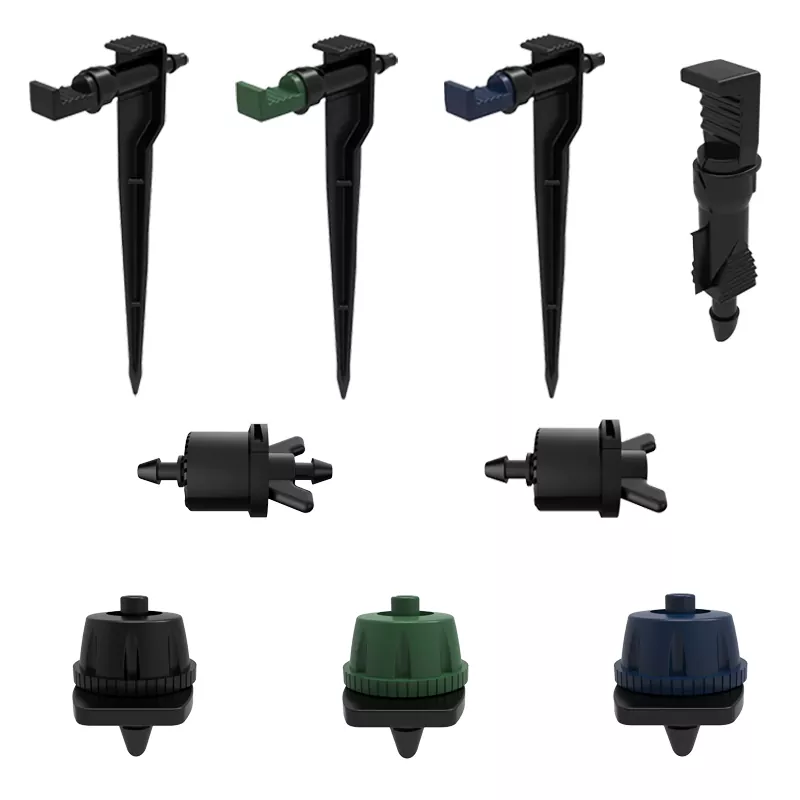
Key Characteristics at a Glance:
| Feature | Pressure Compensating (PC) Dripper | Turbulent Flow (Non-PC) Dripper |
|---|---|---|
| Flow Consistency | Excellent. Maintains steady output. | Variable. Flow increases/decreases with pressure. |
| Ideal Terrain | Slopes, long rows, uneven ground. | Flat, uniform terrain with minimal pressure change. |
| Pressure Range | Wide operational range (e.g., 15-60 PSI). | Narrower optimal range. |
| Clogging Resistance | High, due to self-flushing mechanism. | Good, relies on labyrinth design. |
| Primary Benefit | Uniform irrigation and plant growth. | Cost-effectiveness and simplicity. |
Advantages of Pressure Compensating Technology from MMIP:
-
Guarantees uniform water distribution across the entire zone.
-
Compensates for pressure losses in long lateral lines or pressure gains from elevation drops.
-
Enhances irrigation efficiency, preventing both under-watering and over-watering.
Compensating Drippers FAQ
Q: Can I use Compensating Drippers on a steep slope?
A: Absolutely. This is one of their greatest strengths. The compensating mechanism ensures each dripper emits the same amount of water regardless of the higher pressure at the bottom of the slope, preventing runoff and ensuring even moisture for all plants.
Q: Do Pressure Compensating Drippers prevent clogging?
A: While no dripper is 100% clog-proof, Compensating Drippers are highly resistant. The pressure-regulating diaphragm creates a self-flushing action when the system is turned off, helping to eject small debris from the outlet.
Q: Are they more expensive than standard drippers?
A: Initially, yes. Pressure Compensating Drippers have a higher unit cost due to their complex internal design. However, the investment is quickly offset by superior water savings, healthier plant growth, reduced labor for troubleshooting dry spots, and longer system longevity.
Selecting between these dripper types depends on your specific site conditions and goals. For challenging terrains or where precision is paramount, Pressure Compensating Drippers are the undisputed choice. For simpler, flat applications, turbulent flow models offer reliable performance.
Ready to design a perfectly uniform irrigation system? The experts at MMIP are here to help you analyze your site and recommend the ideal Compensating Drippers or other components. Contact us today for a personalized consultation and quote.