

What Are the Environmental Impacts of Using Rockwool in Hydroponics
2026-03-20
The adoption of soilless growing methods has revolutionized modern agriculture, with Hydroponic Rockwool emerging as a favored substrate for its excellent water retention and aeration properties. However, as sustainability becomes a central concern for growers worldwide, understanding the ecological footprint of this material is essential. At Xirangyuan, we believe in empowering growers with transparent, expert knowledge to make informed decisions that balance productivity with planetary health. This article provides a technical analysis of the environmental impacts associated with Hydroponic Rockwool, from production to disposal.
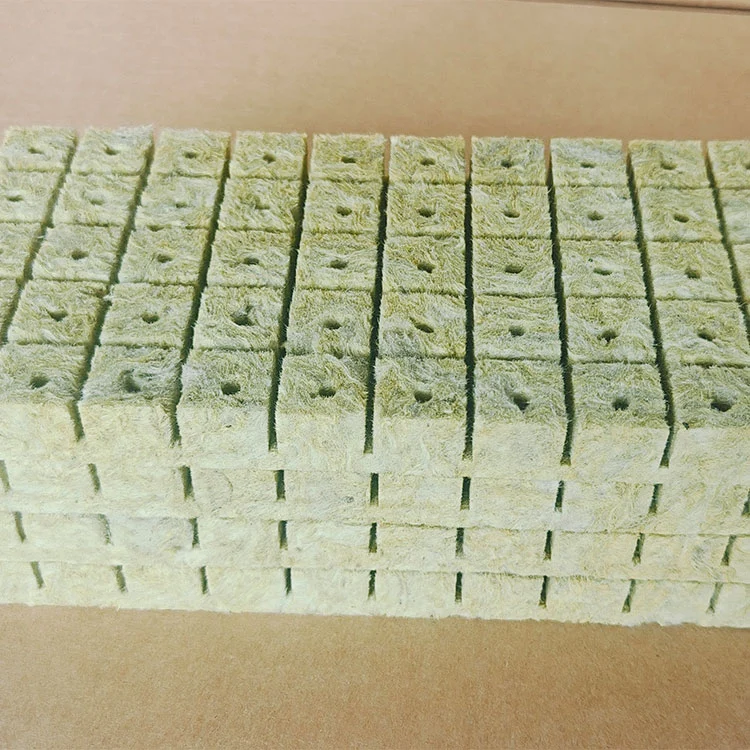
The Production Footprint Energy and Raw Materials
Hydroponic Rockwool is manufactured by melting basalt rock and chalk at temperatures exceeding 1600°C, followed by spinning the mixture into fine fibers. This industrial process is energy-intensive, contributing significantly to its initial carbon footprint. The raw materials are naturally abundant, but the transformation process relies heavily on fossil fuels in many manufacturing regions. Additionally, the fibers are often bound with a small amount of resin and dust-suppressing agents, which introduce synthetic components into an otherwise natural product.
Waste and Disposal Challenges The Landfill Concern
One of the most pressing environmental criticisms of Hydroponic Rockwool is its end-of-life profile. Unlike organic media such as coco coir or peat, rockwool does not biodegrade. If sent to a landfill, it retains its fibrous structure indefinitely. While it is chemically inert and does not leach toxins under normal conditions, its bulk contributes to permanent waste accumulation. Growers must consider that used rockwool, laden with roots and nutrient salts, is generally classified as solid waste that requires specific handling.
Recycling and Reuse Viable Solutions
The industry has made strides in mitigating waste through recycling programs. Some manufacturers accept used Hydroponic Rockwool to be melted down and reformed into new products, including building insulation or new growing slabs. On-site, growers can adopt strategies to extend the life cycle. The table below compares common disposal and reuse methods based on environmental impact and practicality.
| End-of-Life Method | Environmental Impact | Practicality for Growers |
|---|---|---|
| Landfill Disposal | High (Permanent waste) | Low effort, high environmental cost |
| Industrial Recycling | Low (Circular economy) | Requires partnership with recyclers |
| On-site Reuse | Moderate (Extends utility) | Feasible for experienced commercial farms |
Dust and Respiratory Concerns During Handling
During installation, Hydroponic Rockwool can release fine fibers and dust that may irritate skin and lungs. While studies indicate that horticultural rockwool does not pose the same carcinogenic risks as older asbestos materials due to its biosoluble nature, it is classified as a nuisance dust. Responsible use requires protective equipment, and irresponsible disposal of dry waste can lead to airborne fibers affecting local environments. Pre-soaking the material with pH-balanced water is a critical best practice to minimize this impact.
Water and Nutrient Efficiency A Positive Trade-Off
To fully assess the environmental impacts of Hydroponic Rockwool, one must consider its operational benefits. Its high porosity and excellent capillary action allow for precise water and nutrient delivery. Compared to traditional soil farming, systems using Hydroponic Rockwool can reduce water usage by up to 85% and eliminate fertilizer runoff into natural waterways. This efficiency can offset the initial manufacturing footprint over the lifespan of the crop.
Xirangyuan emphasizes that while the production and disposal of Hydroponic Rockwool present real environmental challenges, they can be managed through innovation and best practices. The industry is shifting toward higher-density slabs that last longer and improved recycling logistics. Growers are encouraged to participate in take-back schemes and to consider blending rockwool with other media to reduce reliance.
Hydroponic Rockwool FAQ Common Questions Answered
Q What is the biggest environmental disadvantage of using Hydroponic Rockwool
A The most significant environmental disadvantage is its lack of biodegradability. Because it is a stone-based, man-made fiber, Hydroponic Rockwool will not decompose in a landfill. If not recycled through industrial programs, the used slabs and cubes will persist indefinitely. This has led to increasing scrutiny from environmental agencies and a push for manufacturers to develop more circular take-back systems to ensure the material is reprocessed rather than discarded.
Q Can used Hydroponic Rockwool be safely recycled or repurposed
A Yes, used Hydroponic Rockwool can be recycled, but it requires specific processes. Industrially, it can be collected, cleaned of organic matter, and remelted to create new stone wool products, often for the construction industry. On a smaller scale, home growers can repurpose it by mixing crushed rockwool into soil mixes to improve aeration, though this does not eliminate the material from the environment. The most effective solution is to partner with suppliers that offer a recycling program for spent horticultural slabs.
Q Does using Hydroponic Rockwool save water compared to traditional farming
A Absolutely. One of the primary environmental benefits of Hydroponic Rockwool is its contribution to water conservation. When integrated into a recirculating hydroponic system, the rockwool acts as a stable reservoir that holds moisture and nutrients against gravity while allowing excess to drain back to the tank. This prevents deep percolation and runoff. Consequently, systems utilizing Hydroponic Rockwool can achieve dramatic reductions in water usage, often using a fraction of the water required for conventional soil-based agriculture, which directly supports sustainable water management practices.
Conclusion Make an Informed Choice with Xirangyuan
Understanding the full lifecycle of your growing media is the first step toward responsible cultivation. While Hydroponic Rockwool presents challenges in manufacturing emissions and waste management, its unparalleled efficiency in resource use cannot be overlooked. By adopting best practices such as recycling and careful handling, growers can minimize their environmental footprint.
Are you ready to optimize your growing system with sustainable practices and premium materials Contact Xirangyuan today to explore our range of high-performance Hydroponic Rockwool solutions and expert consultation.