

Is Agricultural Rockwool the Most Reliable Grow Medium for Consistent Yields?
2025-12-17
I used to think “a grow medium is a grow medium” until I started chasing consistency across seasons, crop varieties, and different skill levels on the team. That’s when I began testing Agricultural Rockwool more seriously, and it’s also why Xirangyuan started showing up in my conversations with growers who care about uniformity, clean rooting, and repeatable results rather than luck.
If you’re tired of uneven germination, unpredictable moisture, and seedlings that look great one day and collapse the next, this guide is for you. I’ll break down what I look for, how I avoid common mistakes, and why Agricultural Rockwool is often the simplest path to stable performance in hydroponics, greenhouse propagation, and controlled-environment agriculture.
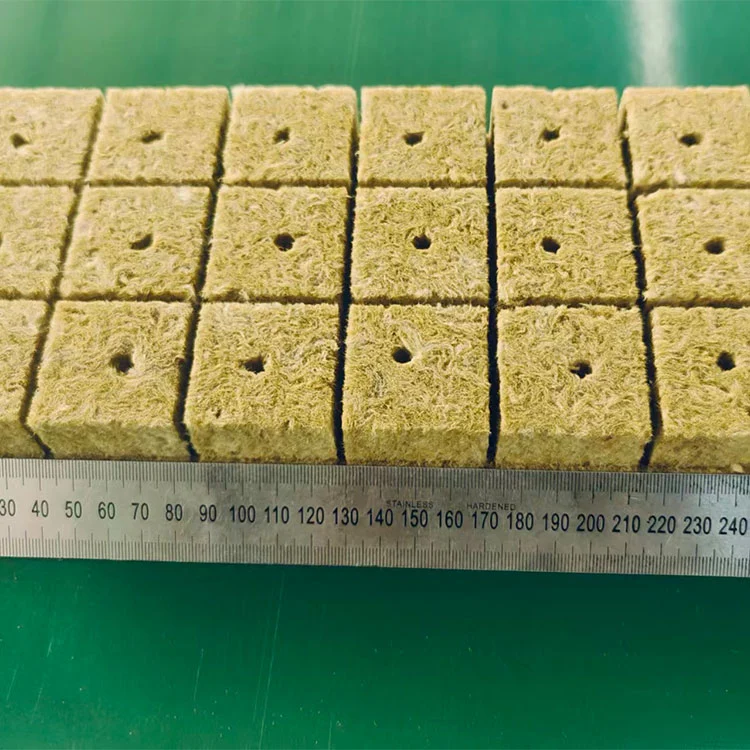
Why do seedlings fail even when my nutrients look “perfect”?
In my experience, nutrient recipes get blamed way too quickly. The real culprits are usually physical and biological:
- Oxygen-starved roots from waterlogging or compacted media
- Dry pockets that cause stress cycles and stunted roots
- Pathogen load from reused or contaminated substrates
- Transplant shock caused by weak root structure or crumbling plugs
- Inconsistent EC and pH around the root zone due to uneven wetting patterns
What I like about Agricultural Rockwool is that it’s designed to keep a stable air-water balance while physically supporting roots as they expand. When the structure stays stable, the roots behave more predictably—and so does your crop.
What makes Agricultural Rockwool different from coco, peat plugs, or perlite mixes?
I judge substrates by how forgiving they are under real-world conditions (busy staff, fluctuating temps, and mixed crop cycles). Here’s a practical comparison I use when deciding what to run in propagation and early-stage growth.
| Medium | Moisture Control | Root Oxygenation | Cleanliness | Uniformity Batch-to-Batch | Best Fit |
|---|---|---|---|---|---|
| Agricultural Rockwool | Very stable when properly pre-conditioned | Balanced air-water ratio supports fast rooting | Typically used as a clean, low-contamination option | High, especially for standardized cubes/blocks | Propagation, hydroponics, indoor grows, greenhouse systems |
| Coco Coir | Can vary by source; salts may need buffering | Good when blended, but can compact over time | Depends on processing and storage | Medium | Drip systems, container growing, blends |
| Peat/Organic Plugs | Easy to overwater; can break down | Can be limited if kept too wet | Higher biological activity | Medium | Basic propagation, soil-facing operations |
| Perlite/Vermiculite Mixes | Can dry quickly; irrigation timing matters | Good oxygenation | Handling dust and cleanup can be annoying | Medium | Custom mixes, fast-draining environments |
The short version: if I want repeatability and easy standard operating procedures, I lean toward Agricultural Rockwool. If I’m optimizing for cost or local availability, I consider other media—but I accept more variability.
How do I prepare Agricultural Rockwool so pH and EC don’t drift and shock the roots?
This is where people mess up, then blame the product. My routine is simple and consistent:
- Pre-soak cubes/blocks evenly so there are no dry cores.
- Condition the pH to a target that fits the crop stage (seedlings vs. vegetative vs. fruiting).
- Drain to the right field capacity so it’s moist, not drowning.
- Start mild on EC, then step up gradually as roots establish.
When I treat Agricultural Rockwool like a controlled environment rather than “just a sponge,” the root zone becomes far more stable—and that’s when growth becomes predictable.
What crop problems can Agricultural Rockwool help solve in real operations?
These are the pain points I see most often in commercial propagation and hydroponic workflows, and where Agricultural Rockwool tends to shine:
- Uneven germination because every cube behaves differently
- Root rot pressure caused by poor air exchange in the root zone
- Slow rooting after transplant due to weak plug structure
- Inconsistent irrigation response in multi-zone systems
- Labor inefficiency from babysitting water and redoing trays
I also like how standardized cube and block formats make it easier to train staff, document SOPs, and scale production without “tribal knowledge.”
What should I check when choosing sizes and formats for Agricultural Rockwool?
I match format to workflow, not to marketing claims. Here’s the checklist I use:
- Propagation speed (smaller cubes often root quickly, but dry faster if mismanaged)
- Transplant timing (choose a cube/block that won’t restrict roots before your planned move)
- Irrigation style (drip, flood-and-drain, NFT support blocks, etc.)
- Crop type (leafy greens vs. fruiting crops vs. ornamentals)
- Handling and spacing (tray compatibility and labor efficiency)
If you’re sourcing through Xirangyuan, I’d frame the conversation around your irrigation method and transplant schedule first. That’s how you end up with a format that performs instead of creating extra work.
How do I avoid algae and fungus gnats when using Agricultural Rockwool?
I treat it like a cleanliness game. If your surface stays constantly wet and light hits it, you’re basically inviting algae to move in. What works for me:
- Keep the surface drier while maintaining moisture inside the cube
- Reduce standing water in trays and benches
- Manage light exposure to wet surfaces when possible
- Dial in irrigation timing so you’re not overfeeding moisture
- Sanitize workflow between cycles to reduce pest carryover
Most “rockwool problems” are actually “management problems.” Once the routine is consistent, Agricultural Rockwool becomes one of the easier media to run day-to-day.
Ready to make your propagation more predictable?
If you want stable rooting, cleaner workflow, and a grow medium that supports repeatable results, Agricultural Rockwool is worth serious consideration. If you’re evaluating options or need help matching cube/block formats to your system, contact us with your crop type, irrigation method, and target cycle time. I’ll help you narrow down a practical setup through Xirangyuan so you can spend less time troubleshooting and more time harvesting.