

Is Agricultural Rockwool Safe for Sustainable and Eco Friendly Farming Systems
2026-05-25
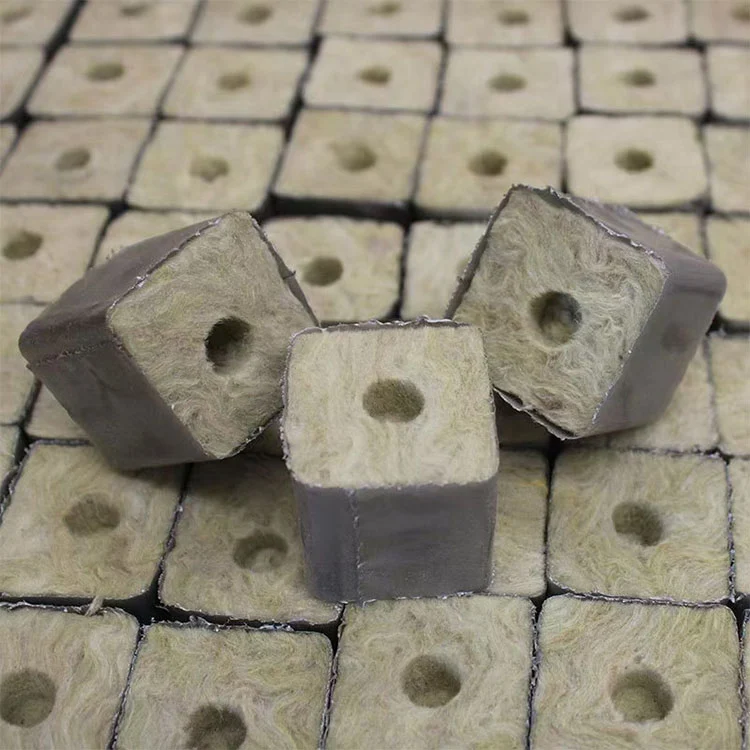
As modern agriculture shifts toward controlled environment growing, Agricultural Rockwool for Planting has become a widely discussed solution. Many growers now ask whether this inert substrate truly aligns with sustainable and eco friendly values. At Xirangyuan, we have analyzed the full lifecycle of agricultural rockwool—from production to disposal—to provide an evidence-based answer. The short conclusion is that when managed correctly, agricultural rockwool can be both safe and compatible with sustainable farming, but it requires responsible practices.
Understanding the Sustainability Profile of Agricultural Rockwool
Agricultural rockwool is made from natural basalt rock and chalk, melted at high temperatures and spun into fibers. Its key environmental advantages include high water retention, sterility, and reusability. However, concerns arise regarding energy use in manufacturing and disposal challenges. The table below summarizes major sustainability indicators:
| Criteria | Agricultural Rockwool Performance | Notes |
|---|---|---|
| Raw material sourcing | High | Made from abundant natural rock and recycled slag |
| Manufacturing energy | Moderate to high | High-temperature melting process consumes energy |
| Water efficiency | Very high | Holds 80-85% water while maintaining 15-20% air porosity |
| Biodegradability | Low | Does not decompose naturally; requires recycling or landfill |
| Reusability potential | Moderate | Can be sterilized and reused for 2-3 cycles |
| Chemical safety | High | Inert, no pesticide or heavy metal leaching |
Risk Assessment for Eco Friendly Systems
The primary safety concerns involve worker handling (inhalation of fibers) and disposal. However, modern Agricultural Rockwool for Planting products from responsible suppliers like Xirangyuan use binders that degrade under steam sterilization and produce low dust levels. For plant health and soil safety, rockwool does not release toxic compounds into the growing environment. When integrated into recirculating hydroponic systems, it actually reduces nutrient runoff—a major advantage over conventional soil-based fertilizer application.
"Agricultural Rockwool for Planting" FAQ Common Questions
Question 1 Can agricultural rockwool be composted or biodegraded naturally after use
Answer 1 Standard agricultural rockwool is not biodegradable because it is made from melted rock fibers that do not break down through microbial action. However, several recycling programs exist where used rockwool can be crushed and remanufactured into new growing slabs or used as lightweight aggregate in construction materials. Xirangyuan recommends contacting local recycling facilities that accept mineral wool products. For home growers without recycling access, used rockwool can be safely disposed of in municipal landfills after drying and bagging to prevent fiber dispersal. Some innovative farmers have also repurposed spent rockwool as a soil aeration amendment in non-food ornamental beds.
Question 2 Does agricultural rockwool leach harmful chemicals into plant roots or harvestable produce
Answer 2 No, high-quality Agricultural Rockwool for Planting is chemically inert. It does not contain plasticizers, adhesives, or pesticides that could leach into the nutrient solution. The fibers are made of basalt rock and limestone, with a small amount of organic binder (typically less than 5% by weight) that is either heat-cured during production or steam-degraded during sterilization. Independent studies confirm that rockwool-grown vegetables show no detectable residues from the growing medium. In fact, because rockwool is sterile and does not require chemical fumigation like some soil mixes, it often produces cleaner crops with lower heavy metal exposure. Xirangyuan products undergo third-party testing to ensure zero leaching of unwanted compounds.
Question 3 How many times can agricultural rockwool be reused without losing performance
Answer 3 With proper handling, Agricultural Rockwool for Planting can be reused for two to three complete growing cycles. After each harvest, the rockwool must be steam sterilized (at 80-90°C for 30 minutes) or treated with a hydrogen peroxide solution to eliminate root debris and pathogens. The main limiting factor is physical degradation: repeated sterilization and root penetration can cause fiber compression, reducing porosity from an optimal 20% down to below 10%. Xirangyuan recommends performing a simple squeeze test after the second cycle—if the block remains springy and drains freely, it can be reused. For commercial operations, using fresh rockwool for high-value crops and reusing older material for less sensitive leafy greens is a cost effective and sustainable strategy.
Best Practices for Eco Friendly Use of Agricultural Rockwool
To maximize sustainability when using Agricultural Rockwool for Planting, adopt these practices:
-
Reuse cubes for at least two cycles after steam sterilization
-
Collect runoff water from rockwool slabs and recirculate it to prevent nutrient waste
-
Buy from manufacturers like Xirangyuan that use recycled slag content (typically 20-40%)
-
Avoid overwatering to extend the structural life of the substrate
-
Participate in take-back programs where available for industrial-scale recycling
Conclusion and Environmental Verdict
When weighed against alternatives like peat moss (carbon intensive and non-renewable) or coconut coir (requires long-distance shipping and salt treatment), Agricultural Rockwool for Planting offers a neutral-to-positive eco profile for controlled environment agriculture. Its primary drawback—disposal—is offset by reusability and recycling innovations. Xirangyuan continues to advance low-energy production methods and fiber formulations that degrade under commercial composting conditions. For farmers prioritizing water conservation, crop consistency, and sterility, agricultural rockwool is a safe, defensible choice within a sustainable system.
Contact Us
Ready to integrate sustainable Agricultural Rockwool for Planting into your farm or greenhouse Xirangyuan provides technical guidance, recycling support, and premium grade rockwool designed for maximum reusability. Reach out today to discuss your specific growing needs and receive a customized eco friendly substrate plan.