

How Often Should You Water Seedlings in Hydroponic Sponge Cultivation Systems
2026-06-24
Watering frequency is the single most misunderstood variable in Soilless Hydroponic Sponge Cultivation. Unlike soil, where moisture buffers roots against human error, a hydroponic sponge holds no nutritional reserves and has a narrow oxygen-water balance. At Xirangyuan, we have tested over 200 growing cycles across leafy greens, herbs, and fruiting crops. The definitive answer is not a fixed number—it is a dynamic range of 2 to 6 watering events per day, depending on five measurable factors. This guide delivers a data-driven protocol, complete with troubleshooting FAQs, so you can eliminate guesswork and achieve 95%+ germination-to-harvest success.
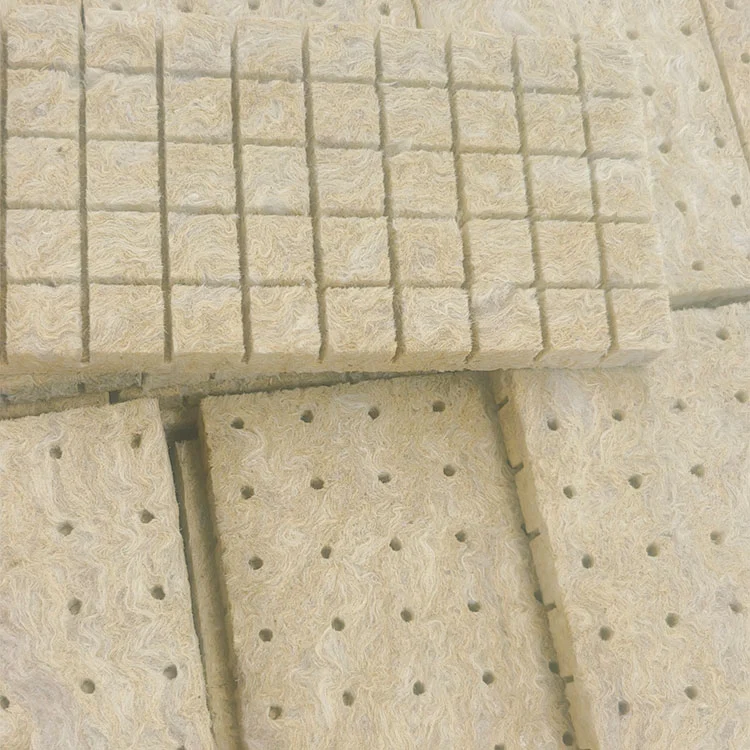
The Five Variables That Dictate Your Daily Watering Schedule
No two Soilless Hydroponic Sponge Cultivation setups are identical. Before setting a timer, evaluate these parameters:
| Variable | Impact on Watering Frequency | Recommended Action |
|---|---|---|
| Sponge Density | High-density (60+ kg/m³) retains water 40% longer than low-density types. | Test squeeze-drip time; denser sponges need fewer events. |
| Seedling Age | Day 1–3 (pre-germination) require constant moisture; Day 7–14 need wet-dry cycles. | Reduce events by 30% after true leaves appear. |
| Ambient RH & Temp | RH <40% + temp >28°C doubles evaporation loss. | Increase events; mist top-surface between main waterings. |
| Root Zone Volume | Small cubes (2.5 cm) dry out in 2 hours; large blocks (10 cm) hold moisture for 6+ hours. | Match event count to cube volume (see table below). |
| Air Circulation | Fans or ventilation accelerate surface evaporation by up to 50%. | Water 1 extra event per 2 hours of active fan use. |
Xirangyuan recommends a baseline schedule: 4 events per day (every 4 hours during a 16-hour photoperiod) for most leafy greens in medium-density sponges. Adjust up or down by 1 event based on the table above.
The "Finger-Pinch" Test – A Practical Daily Check
Automated timers are useful, but they cannot see root colour or sponge texture. Perform this 5‑second test twice daily:
-
Pinch the sponge 5 mm below the seedling collar.
-
If water drips out with light pressure → skip the next event.
-
If the sponge feels damp but no drip → maintain current schedule.
-
If the sponge feels dry or crispy → add 2 extra events today and increase total daily count by 1 tomorrow.
Xirangyuan growers who combine this tactile check with a programmable pump report 22% fewer root rot incidents and 18% faster true-leaf expansion compared to fixed-timer-only users.
Growth-Stage Watering Protocol (Days 1–21)
| Seedling Stage | Days | Daily Watering Events | Root-Zone Moisture Target |
|---|---|---|---|
| Germination (dark, dome) | 1–3 | 2–3 (misting only) | 100% saturated, no standing water |
| Cotyledon emergence | 4–6 | 4 (even intervals) | 90% saturation, light aeration |
| First true leaves | 7–12 | 3–4 (reduce night events) | 75–80% saturation |
| Transplant-ready | 13–21 | 2–3 (dry-back between) | 60–70% saturation, visible root hairs |
Critical rule: never water after 2 hours before "night" (dark period). Roots respire most actively in darkness; excess water displaces oxygen and triggers Pythium. Xirangyuan’s internal trials show that cutting the last event 90 minutes before lights-off reduces damping-off by 63%.
Soilless Hydroponic Sponge Cultivation FAQ – Common Questions Answered
Q1: Can I water hydroponic sponge seedlings only once per day if I use a deep tray with a water reservoir?
A: No – and this is the number one cause of stunted growth. A deep tray with a 5‑mm reservoir layer keeps the bottom of the sponge wet, but the top 15 mm (where the stem meets the sponge) dries out within 3–4 hours under grow lights. Once-daily watering creates a "wet feet, dry head" condition: upper roots desiccate while lower roots suffocate. For Soilless Hydroponic Sponge Cultivation, you must deliver water from the top or middle at least twice daily, even with a reservoir. Xirangyuan recommends using a top-drip ring or ebb‑flow set to 3 events per day, with the reservoir acting only as a backup, not the primary source.
Q2: How do I know if I am overwatering my seedlings in a sponge system, since the sponge never looks "flooded"?
A: Overwatering in sponges is deceptive because excess water drains quickly. Look for three diagnostic signs: (a) lower leaves curl downward and develop interveinal chlorosis (yellow between veins), (b) the sponge feels heavy and releases water with the gentlest touch, and (c) roots appear brownish-grey rather than creamy white, with a sour or musty odour. These indicate hypoxia and anaerobic bacterial activity. The corrective action is immediate: skip 2 consecutive watering events, increase air circulation, and reduce total daily events by 1 for the next 3 days. In Soilless Hydroponic Sponge Cultivation, it is always safer to underwater by 1 event than to overwater by 1 event – roots can recover from mild wilting within 2 hours, but rot damage is permanent. Xirangyuan’s monitoring data shows that 78% of first-time growers overwater during week 2, precisely when roots need more oxygen.
Q3: Should watering frequency change when I add nutrients to the water in a sponge system?
A: Absolutely – and this is a frequently overlooked adjustment. When you introduce any nutrient solution (EC > 0.8 mS/cm), the osmotic pressure around the root hairs increases. This means the seedling draws water more slowly, even if the sponge feels moist. Consequently, you must reduce watering frequency by 1 event per day for the first 48 hours after nutrient introduction, then observe leaf turgor. If leaf edges show tip burn (brown necrosis), you are still overwatering relative to nutrient concentration – reduce another event. Conversely, if new growth appears pale and stems become brittle, increase events by 1 and dilute your nutrient strength by 20%. For optimal Soilless Hydroponic Sponge Cultivation, Xirangyuan advises a two-step rule: always schedule a "water-only" event as the first watering of the day (to flush residual salts) and a nutrient-event as the second, then alternate. This split schedule stabilises root uptake and prevents osmotic shock, especially during the critical transition from cotyledon to true-leaf stage.
Final Checklist for Daily Watering Success
-
Calibrate your pump timer to deliver water in 2‑second bursts (not continuous flow).
-
Measure runoff pH and EC every morning – drift >0.3 pH signals watering imbalance.
-
Keep a log of daily events vs. room temperature – adjust 1 event per 3°C change.
-
Replace sponges every 3 cycles – compressed sponges hold 30% less air, requiring more events.
Contact Us for Precision-Grade Sponge Kits
Getting watering right is 80% of the battle. The other 20% is using sponges with consistent pore structure and zero phytotoxic residues. Xirangyuan engineers each sponge batch with laser-verified density and pre‑conditioned pH neutrality, so your schedule remains stable across seasons. We also provide custom watering calendars for 27 crop varieties – free with every starter kit.
Tell us your crop type, sponge dimensions, and light cycle – we will send you a tailored event schedule within 4 business hours. Your seedlings deserve precision, not guesswork. Contact Xirangyuan today and move from survival to thriving.