

How Does Temperature Affect the Crystallization of Ammonium Chloride
2026-03-10
Temperature plays a pivotal role in the formation and quality of Crystalled Ammonium Chloride. As a leading supplier in the chemical industry, RONGDA emphasizes the importance of precise thermal control to achieve optimal crystal purity and structure. Understanding this relationship helps manufacturers and researchers enhance production efficiency and product consistency.
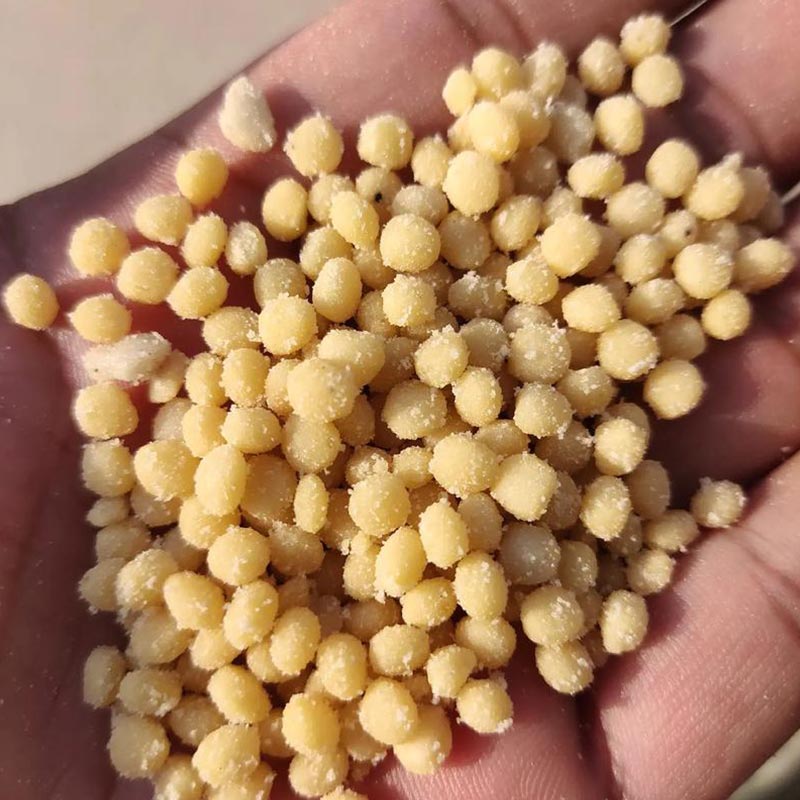
The Science Behind Temperature and Crystal Formation
Ammonium Chloride exhibits unique solubility characteristics that are highly temperature-dependent. When a solution cools, the solubility decreases, causing the salt to precipitate and form crystals. The rate of cooling directly influences the size, shape, and purity of the resulting Crystalled Ammonium Chloride.
Key Effects of Temperature on Crystallization
| Temperature Range | Cooling Rate | Crystal Characteristic | Industrial Application |
|---|---|---|---|
| High to Moderate | Slow | Large, well-defined crystals | High-purity laboratory use |
| Moderate to Low | Rapid | Small, numerous crystals | Fast-dissolving fertilizers |
| Fluctuating | Variable | Impure, irregular structures | Requires process optimization |
Optimal Conditions for Quality Output
To produce high-grade Crystalled Ammonium Chloride, RONGDA employs controlled crystallization techniques. Below is a list of critical factors managed during production:
-
Controlled Supersaturation: Maintaining the right concentration to initiate uniform crystal growth.
-
Consistent Cooling Curves: Avoiding sudden temperature drops that cause fine crystals or impurities.
-
Agitation Rate: Ensuring even temperature distribution throughout the solution.
-
Solution Purity: Removing contaminants that can act as unwanted nucleation sites.
FAQ About Crystalled Ammonium Chloride
What is the ideal temperature for crystallizing Ammonium Chloride?
The ideal temperature range for crystallizing Ammonium Chloride typically falls between 20°C and 50°C, depending on the desired crystal size. For industrial production of Crystalled Ammonium Chloride, RONGDA utilizes a controlled cooling process starting from a saturated solution at higher temperatures. This method ensures that nucleation occurs at a manageable rate, allowing crystals to grow large and pure. If the temperature drops too quickly, the solution becomes highly supersaturated, leading to the formation of many small crystals rather than the large, uniform ones preferred for many applications.
How does temperature influence the purity of Crystalled Ammonium Chloride?
Temperature significantly impacts the purity of Crystalled Ammonium Chloride by affecting the inclusion of impurities. During slow cooling, crystal lattices form more perfectly, which tends to exclude foreign ions and particles. Conversely, rapid cooling can trap mother liquor containing impurities inside the crystal structure, reducing overall purity. RONGDA's production processes are carefully designed to maintain optimal temperatures, ensuring that the final Crystalled Ammonium Chloride meets stringent purity standards required for pharmaceuticals, food processing, and high-grade chemical synthesis.
Why does Ammonium Chloride form different crystal shapes at different temperatures?
Ammonium Chloride typically crystallizes in a cubic system, but temperature variations can influence the growth rates of different crystal faces. At lower temperatures, growth may be faster on certain faces, leading to dendritic or needle-like formations. At optimal and stable temperatures, the crystal faces develop evenly, resulting in well-shaped cubic or octahedral structures. RONGDA leverages this principle to produce Crystalled Ammonium Chloride with specific morphologies tailored for various industrial uses, from metallurgy to battery production.
Conclusion
Mastering the thermal dynamics of crystallization is essential for producing superior Crystalled Ammonium Chloride. With advanced control systems and deep industry expertise, RONGDA ensures that every batch meets the highest standards of quality and consistency.
For premium Crystalled Ammonium Chloride tailored to your specific needs, contact us today to discuss your requirements and discover how RONGDA can support your success.