

Article Summary: Hydroponic Rockwool Medium has become a widely adopted growing substrate in modern soilless cultivation systems. Its stable structure, excellent water retention, and predictable performance help growers address common challenges such as uneven root development, water imbalance, and inconsistent yields. This article provides a comprehensive explanation of how Hydroponic Rockwool Medium works, its technical characteristics, practical advantages, and real-world applications in commercial and small-scale hydroponic farming.
Outline
- Introduction to Hydroponic Rockwool Medium
- Why Consistency Matters in Hydroponic Cultivation
- Physical and Functional Characteristics of Rockwool
- Technical Parameters and Product Specifications
- Common Grower Pain Points and Practical Solutions
- Application Scenarios in Different Crop Types
- Frequently Asked Questions
- Conclusion and Contact Us
Introduction to Hydroponic Rockwool Medium
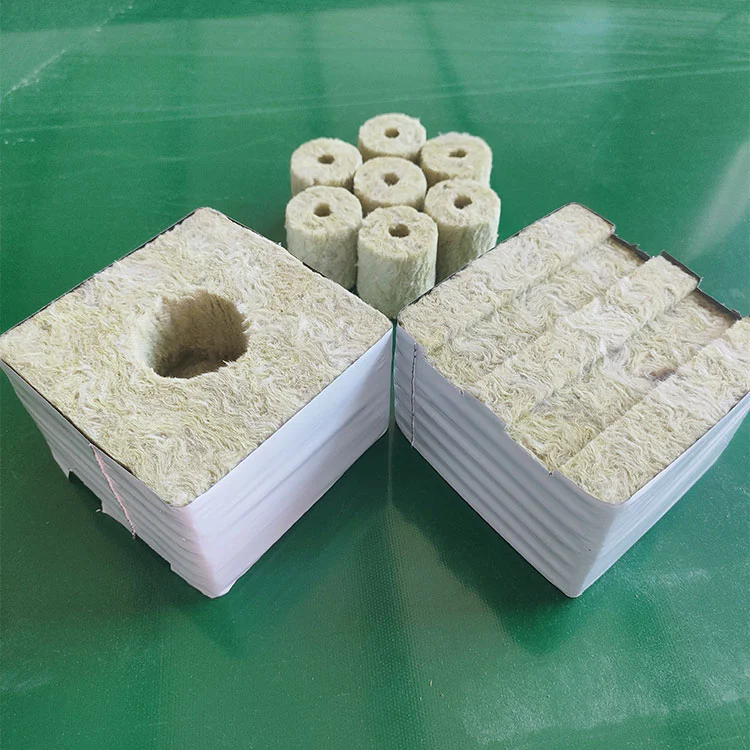
Hydroponic Rockwool Medium is a mineral-based growing substrate manufactured by melting basalt rock and spinning it into fine fibers. These fibers are formed into blocks, slabs, or cubes designed specifically for plant propagation and growth in soilless systems. Unlike traditional soil, rockwool offers a sterile, uniform, and controllable environment that supports predictable root development.
In hydroponic farming, consistency is directly linked to profitability and crop quality. Variations in moisture, oxygen availability, or root support can lead to uneven growth and yield losses. Hydroponic Rockwool Medium addresses these challenges by providing a stable and repeatable growing environment across different cultivation cycles.
Why Consistency Matters in Hydroponic Cultivation
One of the most common challenges faced by hydroponic growers is variability. Inconsistent root-zone conditions often result in uneven plant size, delayed growth stages, and unpredictable harvest timing. These issues can complicate nutrient scheduling, labor planning, and market delivery.
Hydroponic Rockwool Medium minimizes variability by offering uniform density, predictable water absorption, and reliable air-to-water ratios. This consistency allows growers to standardize irrigation strategies and nutrient delivery, ensuring each plant receives the same growing conditions.
Physical and Functional Characteristics of Rockwool
- High Water Retention: Rockwool fibers hold moisture efficiently while still allowing excess water to drain.
- Excellent Aeration: The porous structure ensures roots receive sufficient oxygen.
- Sterile Composition: Free from pests, weed seeds, and pathogens at production.
- Structural Stability: Maintains shape and density throughout the growing cycle.
- Neutral Base: Allows precise control of nutrient composition.
These characteristics make Hydroponic Rockwool Medium particularly suitable for growers who require repeatable results across multiple crop cycles.
Technical Parameters and Product Specifications
| Parameter | Description |
|---|---|
| Raw Material | Natural basalt rock |
| Fiber Structure | Uniform mineral fibers with controlled density |
| Water Holding Capacity | High retention with balanced drainage |
| Air Porosity | Optimized for root oxygenation |
| pH Neutrality | Stable base for nutrient adjustment |
| Available Formats | Cubes, blocks, slabs, custom sizes |
Common Grower Pain Points and Practical Solutions
Uneven Root Development: Traditional substrates may compact or degrade over time, limiting root expansion. Rockwool maintains consistent structure, supporting uniform root spread.
Overwatering or Dry Spots: Soil and low-quality substrates often retain water unevenly. Rockwool distributes moisture evenly, reducing stress caused by water imbalance.
Disease Pressure: Soil-based systems can harbor pathogens. Hydroponic Rockwool Medium starts sterile, reducing the risk of root-borne diseases.
Limited Control: Rockwool allows growers to precisely manage irrigation frequency, nutrient concentration, and oxygen availability.
Application Scenarios in Different Crop Types
Hydroponic Rockwool Medium is widely used in the cultivation of leafy greens, tomatoes, cucumbers, peppers, strawberries, and herbs. Its adaptability makes it suitable for:
- Commercial greenhouse production
- Vertical farming systems
- Seedling propagation and cloning
- High-density crop operations
Growers working with Xirangyuan products often integrate rockwool into automated irrigation systems, enabling scalable and repeatable cultivation practices.
Frequently Asked Questions
Is Hydroponic Rockwool Medium reusable?
Rockwool can be reused under certain conditions if properly cleaned and sterilized. However, many commercial growers prefer single-cycle use to maintain consistent performance.
Does rockwool affect nutrient absorption?
Rockwool itself does not supply nutrients. Its neutral composition allows plants to absorb nutrients directly from the solution, giving growers full control over feeding strategies.
Is rockwool suitable for beginners?
Yes, its predictable behavior makes it a reliable choice for both new and experienced hydroponic growers.
How should rockwool be prepared before use?
Rockwool is typically soaked in water adjusted to the desired pH before planting to stabilize the growing environment.
Conclusion and Contact Us
Hydroponic Rockwool Medium plays a critical role in improving crop consistency by creating a stable, controllable root-zone environment. Its physical reliability, combined with precise irrigation and nutrient management, allows growers to reduce variability and improve overall yield quality.
As a trusted supplier, Xirangyuan focuses on delivering high-quality Hydroponic Rockwool Medium designed to meet the demands of modern soilless agriculture. If you are looking to optimize crop performance and streamline your hydroponic system, contact us today to learn how Xirangyuan solutions can support your growing goals.