

How Does Droplet Size Affect the Performance of a Machine Trailed Air Blast Sprayer in Field Crops
2026-04-16
When operating a Machine Trailed Air Blast Sprayer in large-scale field crops, droplet size is not a minor setting—it is a decisive factor influencing efficacy, drift, and yield protection. FASTMA has engineered its sprayers to help farmers master this variable for optimal results.
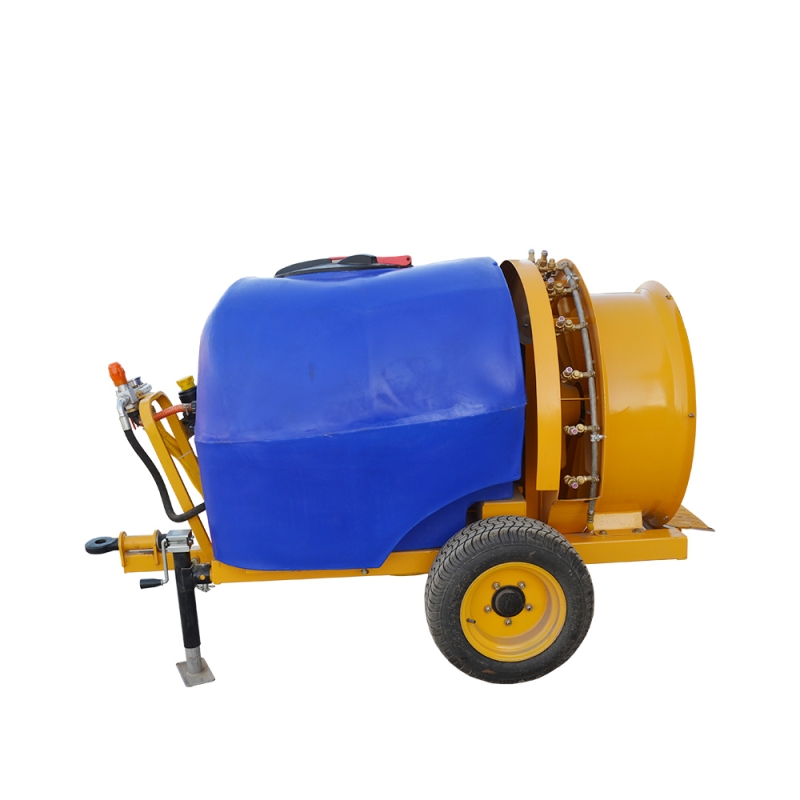
The Science of Droplet Size
Droplet size determines how a pesticide travels from the nozzle to the target canopy. Fine droplets provide better coverage but are prone to drift. Coarse droplets resist drift but may miss lower leaf surfaces. The ideal balance depends on crop type, pest pressure, and weather conditions.
| Droplet Category | Diameter (Microns) | Best Use Case | Drift Risk | Coverage Quality |
|---|---|---|---|---|
| Very Fine | < 100 | Humid, low-wind days only | Extreme | Excellent (full wrap-around) |
| Fine | 100–175 | Dense canopies, insecticides | High | Very Good |
| Medium | 175–250 | General field crop spraying | Moderate | Good |
| Coarse | 250–375 | Herbicides, systemic products | Low | Fair |
| Very Coarse | > 375 | Bare soil, desiccants | Very Low | Poor |
Performance Impact in Real Field Conditions
Using a Machine Trailed Air Blast Sprayer with incorrectly sized droplets leads to three common failures:
-
Drift loss – Fine droplets travel beyond target zones, wasting chemicals and harming neighboring crops.
-
Runoff – Overly coarse droplets bounce off waxy leaves, falling to the ground unused.
-
Uneven deposition – Inconsistent droplet size creates gaps in pest control, requiring repeat applications.
FASTMA air blast systems allow operators to adjust nozzle pressure, flow rate, and fan speed independently, giving precise control over droplet spectra without sacrificing forward speed.
FASTMA Recommended Settings for Common Field Crops
| Crop Type | Recommended Droplet Size | Typical Pressure (PSI) | Air Speed Setting |
|---|---|---|---|
| Corn (tasseling) | Medium to Coarse | 60–80 | Low to Medium |
| Soybeans (full canopy) | Medium | 50–70 | Medium |
| Wheat (stem elongation) | Fine to Medium | 40–60 | High |
| Potatoes (vine closure) | Medium | 55–75 | Medium to High |
| Cotton (pre-bloom) | Coarse | 70–90 | Low |
Machine Trailed Air Blast Sprayer FAQ
What droplet size is best for systemic insecticides in broadleaf crops?
Medium droplets (175–250 microns) are ideal. They provide enough mass to resist drift, yet remain small enough to penetrate the middle canopy and adhere to leaf surfaces where systemic uptake occurs. FASTMA sprayers maintain consistent medium droplet size even at variable forward speeds.
Can I change droplet size without replacing nozzles on my sprayer?
Yes, within a range. By adjusting operating pressure—higher pressure produces finer droplets, lower pressure produces coarser droplets—you can shift droplet size. However, extreme pressure changes affect flow rate and pattern. FASTMA recommends using pressure regulation in combination with air speed adjustment for best results without changing nozzle types.
How do I measure actual droplet size in the field without lab equipment?
Use the water-sensitive paper method. Place small cards at different canopy heights and spray with water mixed with a tracer dye. After drying, the density of stained spots correlates with droplet size distribution. For precise measurement, FASTMA offers portable laser-based droplet analyzers for on-farm diagnostics.
Conclusion
Droplet size directly transforms the performance of any Machine Trailed Air Blast Sprayer. Too fine, and you lose chemistry to drift. Too coarse, and pests survive beneath unprotected leaves. With FASTMA advanced air blast systems, operators gain the precision to match droplet size to every unique field condition.
Contact us today to request a personalized droplet optimization guide for your crops. Our team provides free on-farm assessments and demo units. Visit FASTMA official website or call your regional distributor to schedule a consultation.