

How Does a Satellite Land Leveler Improve Agricultural Land Preparation?
2026-03-13
Article Summary
Uneven farmland can significantly reduce irrigation efficiency, crop yield, and overall field productivity. Traditional land leveling methods often lack precision and require substantial labor and time. A Satellite Land Leveler introduces modern positioning technology to solve these problems by enabling highly accurate land grading and slope control.
This article explains how a Satellite Land Leveler works, the core components involved, the advantages it brings to agricultural operations, and why it is becoming a critical tool in precision farming. The guide also explores key specifications, practical benefits for farmers, and common questions about this advanced land preparation equipment.
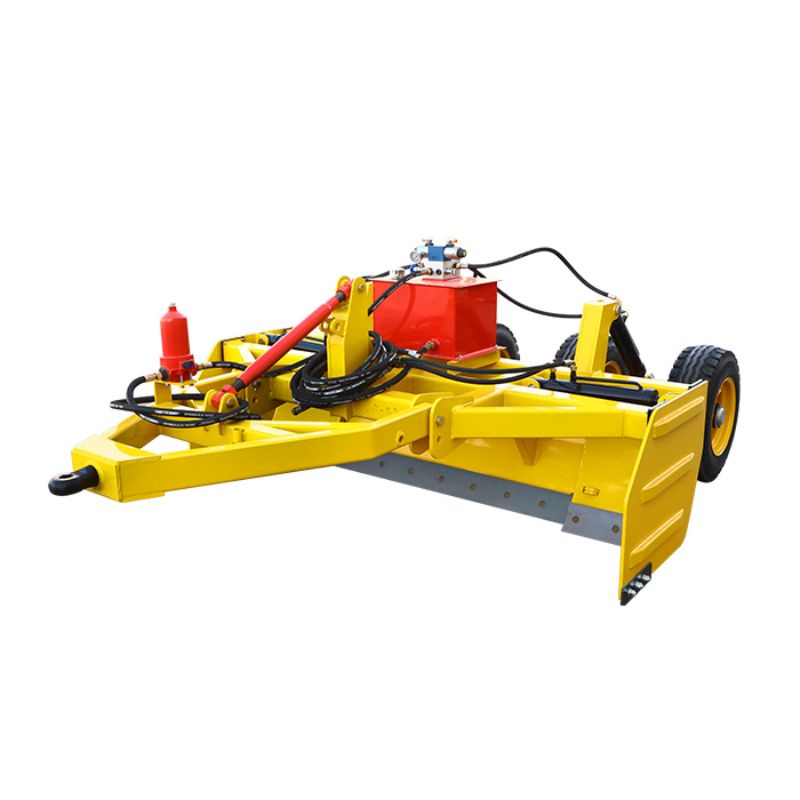
Table of Contents
- How a Satellite Land Leveler Works
- Why Accurate Land Leveling Matters in Agriculture
- Main Components of a Satellite Land Leveler
- Typical Technical Parameters
- Key Benefits for Farmers
- Operational Process in the Field
- Applications Across Different Crops and Terrains
- Frequently Asked Questions
- Conclusion
How a Satellite Land Leveler Works
A Satellite Land Leveler uses satellite-based positioning systems combined with automated hydraulic control to level agricultural land with high precision. Instead of relying solely on manual observation or traditional mechanical leveling, the machine constantly receives positioning signals and adjusts blade height automatically.
The system typically works with Global Navigation Satellite System (GNSS) technology to calculate elevation differences across the field. Once the target grade or slope is set, the leveling blade adjusts in real time while the tractor moves across the land.
The working principle includes several steps:
- Satellite receivers determine precise field elevation
- A control unit compares actual terrain height with the target grade
- The hydraulic system raises or lowers the scraper blade
- Soil is cut from higher spots and moved to lower areas
- The field surface becomes uniformly leveled
This continuous adjustment ensures that the final surface maintains consistent elevation across large farmland areas.
Why Accurate Land Leveling Matters in Agriculture
Field leveling is a fundamental step in agricultural land preparation. Even small elevation differences can create major problems during irrigation and planting.
When fields are uneven, water distribution becomes irregular. Some areas may become flooded while others remain dry, leading to inconsistent crop growth.
Proper land leveling helps solve several common challenges:
- Improves irrigation efficiency
- Reduces water wastage
- Enhances crop uniformity
- Prevents soil erosion
- Improves fertilizer distribution
With a Satellite Land Leveler, these benefits can be achieved with much greater precision compared to traditional manual or laser-based leveling techniques.
Main Components of a Satellite Land Leveler
A modern Satellite Land Leveler integrates mechanical engineering with advanced positioning technology. Several key components work together to ensure accurate and efficient operation.
- Satellite Receiver – Receives GNSS signals to determine field elevation
- Control Panel – Allows the operator to set slope, elevation targets, and leveling parameters
- Hydraulic System – Controls the movement of the leveling blade
- Scraper Blade – Cuts soil from higher areas and deposits it into lower sections
- Mounting Frame – Connects the leveling unit to the tractor
These components work in synchronization to deliver highly consistent field grading performance.
Typical Technical Parameters
The performance of a Satellite Land Leveler depends on several mechanical and operational parameters. The following table outlines common specifications seen in modern agricultural leveling equipment.
| Product Name | Satellite Land Leveler |
| Positioning System | GNSS / Satellite Guidance |
| Leveling Accuracy | ±2 cm |
| Working Width | 2.5 – 4.5 meters |
| Operating Speed | 4 – 8 km/h |
| Control System | Automatic Hydraulic Adjustment |
| Compatible Tractor Power | 80 – 200 HP |
| Application Area | Rice fields, wheat fields, irrigation farmland |
Key Benefits for Farmers
Adopting a Satellite Land Leveler can significantly improve farm productivity and operational efficiency. Compared with traditional land grading methods, satellite-guided leveling offers measurable advantages.
Higher Precision
Satellite positioning technology ensures consistent elevation control across the entire field, minimizing uneven surfaces.
Water Conservation
Uniform field slopes allow irrigation water to spread evenly, reducing water consumption and improving moisture retention.
Reduced Labor Requirements
Automated blade control eliminates the need for repeated manual adjustments, allowing a single operator to manage large areas.
Improved Crop Yield
Consistent soil moisture and nutrient distribution contribute to healthier plant growth and better harvest results.
Lower Fuel Consumption
Efficient leveling reduces the number of passes required, saving time and energy during land preparation.
Operational Process in the Field
Using a Satellite Land Leveler typically follows a systematic workflow to ensure optimal results.
- Field survey and elevation mapping
- Input of desired slope or level into the control system
- Installation of satellite receiver and hydraulic controls
- Initial leveling pass across the field
- Automatic adjustment during subsequent passes
- Final surface verification
Once the leveling operation is complete, the field surface becomes suitable for efficient irrigation and planting.
Applications Across Different Crops and Terrains
Satellite-guided land leveling technology is widely used across various agricultural environments. The flexibility of the system allows it to adapt to different soil types and crop production requirements.
Common applications include:
- Rice paddy leveling
- Wheat and corn farmland preparation
- Vegetable cultivation fields
- Large irrigation districts
- Rehabilitation of uneven farmland
By maintaining consistent slopes and field surfaces, farmers can ensure more reliable crop growth across multiple planting seasons.
Frequently Asked Questions
Q1: What is the difference between a laser land leveler and a Satellite Land Leveler?
A laser land leveler relies on a ground-based laser transmitter for reference, while a Satellite Land Leveler uses GNSS positioning. Satellite systems are more flexible and suitable for large or irregularly shaped fields.
Q2: Can a Satellite Land Leveler be used on different soil types?
Yes. The equipment is designed to work on clay, loam, sandy soils, and mixed farmland. Proper blade adjustment ensures effective soil movement across varying conditions.
Q3: What tractor power is required to operate this machine?
Most Satellite Land Levelers require tractors ranging from 80 to 200 horsepower depending on the machine size and working width.
Q4: Does satellite leveling require internet connectivity?
Many systems operate through satellite signals alone, although some advanced configurations use correction signals to improve accuracy.
Conclusion
Efficient land preparation plays a critical role in modern agricultural productivity. A Satellite Land Leveler introduces precise elevation control, automated blade adjustments, and advanced positioning technology to ensure uniform field surfaces. This results in better irrigation efficiency, improved soil management, and increased crop performance.
With the continuous advancement of precision agriculture equipment, more farms are adopting satellite-guided leveling systems to improve operational efficiency and reduce resource waste. Companies such as FASTMA® continue to develop reliable land leveling solutions designed for large-scale farming environments.
If you are looking for advanced agricultural leveling equipment that improves field performance and irrigation management, FASTMA® provides professional solutions tailored for modern farming needs. Contact us today to learn more about our Satellite Land Leveler technology and discover how it can enhance your agricultural operations.