

How Does a Fertilizer Spreader Improve Lawn and Field Productivity?
2026-07-17
Healthy crops, lush lawns, and productive fields all depend on one essential factor—accurate fertilizer application. Many farmers, landscapers, and property owners still struggle with uneven fertilizer distribution, wasted materials, and inconsistent plant growth caused by manual spreading methods.
A Fertilizer Spreader provides a practical solution by delivering fertilizer evenly across the target area, reducing labor costs while improving efficiency and crop performance. Whether you manage agricultural land, orchards, sports fields, or residential landscapes, selecting the right spreader can significantly increase productivity while minimizing fertilizer waste.
Article Summary
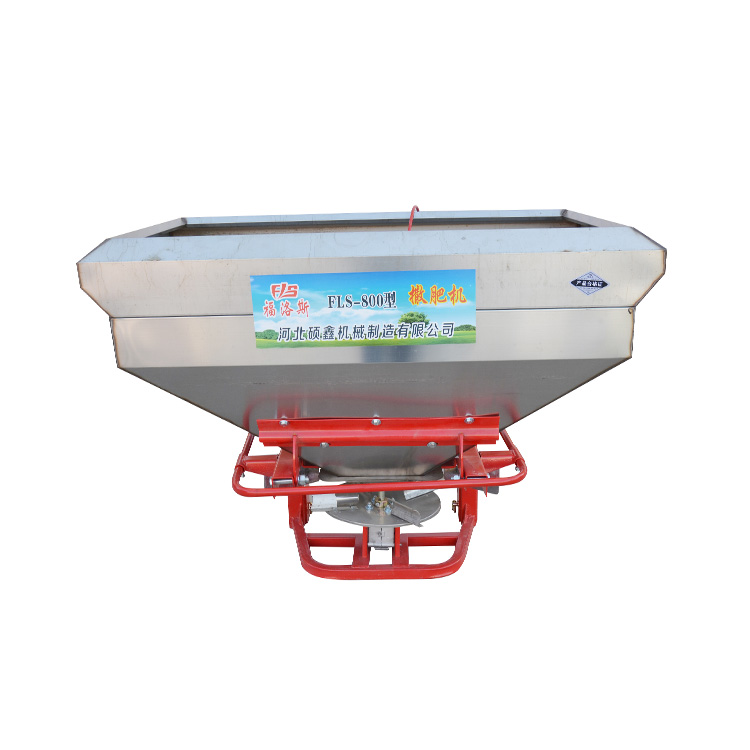
This article explains how a Fertilizer Spreader works, why accurate fertilizer application matters, the different types of spreaders available, key buying considerations, maintenance tips, and common mistakes to avoid. It also demonstrates how modern fertilizer spreaders from Shuoxin help improve operational efficiency, reduce operating costs, and support healthier crop growth.
Table of Contents
- Why Is Even Fertilizer Distribution Important?
- How Does a Fertilizer Spreader Work?
- Common Types of Fertilizer Spreaders
- Major Benefits of Using a Fertilizer Spreader
- How to Choose the Right Fertilizer Spreader
- Manual vs Mechanical Fertilizer Application
- Maintenance Tips
- Common Mistakes to Avoid
- Typical Application Scenarios
- Frequently Asked Questions
- Conclusion
Why Is Even Fertilizer Distribution Important?
Plants require consistent access to nutrients throughout the growing season. Uneven fertilizer application creates nutrient-rich and nutrient-poor areas, leading to inconsistent crop development and unnecessary fertilizer consumption.
Over-fertilized areas may experience fertilizer burn, excessive vegetative growth, or environmental runoff. Under-fertilized sections often produce weaker plants, lower yields, and uneven crop quality.
A professional Fertilizer Spreader minimizes these issues by delivering fertilizer at a controlled rate over a consistent spreading width, helping every part of the field receive similar nutrient levels.
How Does a Fertilizer Spreader Work?
A Fertilizer Spreader is designed to distribute granular fertilizer uniformly over a specified area. Although different models operate differently, most follow the same basic working principle.
- Fertilizer is loaded into the hopper.
- The feeding mechanism regulates material flow.
- A rotating disc, spinner, or spreading mechanism disperses fertilizer.
- The operator adjusts application rate according to field conditions.
- Even distribution improves nutrient utilization.
Modern spreaders often include adjustable flow controls, corrosion-resistant components, high-capacity hoppers, and durable transmission systems to improve spreading accuracy and machine reliability.
Common Types of Fertilizer Spreaders
| Type | Best For | Main Advantages |
|---|---|---|
| Broadcast Spreader | Large farms and open fields | Fast coverage with high efficiency |
| Drop Spreader | Lawns and precise applications | Excellent spreading accuracy |
| Mounted Spreader | Agricultural tractors | High productivity for commercial farming |
| Tow-Behind Spreader | Parks and sports fields | Easy transportation and large capacity |
| Walk-Behind Spreader | Home gardens | Simple operation and affordable cost |
Major Benefits of Using a Fertilizer Spreader
Investing in a quality Fertilizer Spreader offers advantages beyond simply distributing fertilizer.
- Improves fertilizer utilization efficiency
- Reduces labor intensity
- Provides uniform nutrient distribution
- Minimizes fertilizer waste
- Supports healthier crop development
- Increases working efficiency
- Reduces operating costs
- Suitable for multiple fertilizer types
- Enhances long-term crop productivity
Compared with manual broadcasting, mechanical spreading delivers greater consistency while allowing operators to cover significantly larger working areas within the same amount of time.
How to Choose the Right Fertilizer Spreader
Choosing the correct spreader depends on several practical factors rather than simply selecting the largest machine.
| Consideration | Recommendation |
|---|---|
| Farm Size | Choose larger capacity models for extensive farmland. |
| Terrain | Select stable equipment suitable for uneven ground. |
| Fertilizer Type | Ensure compatibility with granular or blended fertilizers. |
| Power Source | Select manual, PTO-driven, or tractor-mounted models. |
| Corrosion Resistance | Prefer stainless steel or anti-rust materials. |
| Adjustment Range | Look for precise application rate controls. |
| Maintenance | Choose equipment with accessible replacement parts. |
Businesses with large-scale agricultural operations generally benefit from tractor-mounted fertilizer spreaders, while homeowners often find compact walk-behind models sufficient for lawn care.
Manual vs Mechanical Fertilizer Application
| Factor | Manual Spreading | Fertilizer Spreader |
|---|---|---|
| Efficiency | Low | High |
| Uniformity | Inconsistent | Excellent |
| Labor Requirement | High | Low |
| Material Waste | More | Less |
| Working Speed | Slow | Fast |
| Coverage Area | Limited | Large |
| Long-Term Cost | Higher | Lower |
Mechanical spreading not only increases operational efficiency but also helps reduce repeated fertilizer applications, saving both time and material expenses throughout the growing season.
Maintenance Tips
Routine maintenance helps maximize equipment lifespan and maintain spreading accuracy.
- Clean the hopper after every use.
- Remove fertilizer residue immediately to prevent corrosion.
- Lubricate moving components regularly.
- Inspect transmission parts before operation.
- Tighten bolts and fasteners.
- Store equipment in a dry environment.
- Replace worn spreading discs when necessary.
- Calibrate application rates periodically.
Proper maintenance minimizes unexpected downtime during busy planting and fertilizing seasons.
Common Mistakes to Avoid
Even experienced operators sometimes reduce spreading performance through avoidable errors.
- Using incorrect application settings
- Ignoring calibration before operation
- Operating at inconsistent driving speeds
- Overloading the hopper
- Failing to clean fertilizer residue
- Applying fertilizer during strong winds
- Using unsuitable fertilizer materials
- Skipping routine inspections
Correct operating procedures significantly improve spreading consistency while extending equipment service life.
Typical Application Scenarios
A Fertilizer Spreader serves many industries beyond traditional farming.
| Industry | Application |
|---|---|
| Agriculture | Crop fertilization |
| Fruit Orchards | Nutrient management |
| Vegetable Farms | Precision fertilizer distribution |
| Golf Courses | Turf maintenance |
| Sports Fields | Grass nutrition |
| Municipal Landscaping | Public green spaces |
| Residential Lawns | Garden maintenance |
Modern fertilizer spreaders can efficiently handle multiple fertilizer formulations, making them valuable equipment for both commercial agriculture and professional landscaping.
Frequently Asked Questions
Q1. What fertilizer can a Fertilizer Spreader handle?
Most machines are designed for granular fertilizers, blended fertilizers, and certain pelletized materials. Always verify compatibility with the manufacturer's specifications.
Q2. How often should a spreader be calibrated?
Calibration is recommended before each major fertilization project or whenever fertilizer type changes.
Q3. Can one spreader work for different crops?
Yes. Adjustable application rates allow one machine to serve various crops with different nutrient requirements.
Q4. Is a tractor-mounted spreader better than a walk-behind model?
For large farms, tractor-mounted models provide much greater productivity. For home gardens and smaller landscapes, walk-behind spreaders remain highly practical.
Q5. How can fertilizer waste be reduced?
Proper calibration, consistent operating speed, routine maintenance, and selecting the appropriate spreader size all contribute to reducing fertilizer waste.
Conclusion
A reliable Fertilizer Spreader is one of the most valuable investments for improving fertilizer efficiency, reducing labor costs, and achieving consistent crop or lawn performance. Whether managing commercial farmland, orchards, municipal landscaping, or residential properties, the right equipment helps maximize nutrient utilization while minimizing unnecessary waste.
Shuoxin specializes in manufacturing dependable agricultural machinery designed to meet the needs of modern farming. With durable construction, stable performance, and user-friendly operation, Shuoxin Fertilizer Spreaders help customers improve productivity while lowering operating costs. If you are looking for a dependable fertilizer spreading solution tailored to your agricultural requirements, contact us today to learn more about our products and professional support.