

How Does a Corn Seeder Improve Planting Accuracy and Field Efficiency?
2025-12-12
A corn seeder is an agricultural implement engineered to automate and optimize the process of sowing corn seeds across large-scale farmland. It performs precise seed metering, controlled seed spacing, uniform depth placement, and stable seed-to-soil contact, enabling growers to achieve higher germination rates and increased yield uniformity.
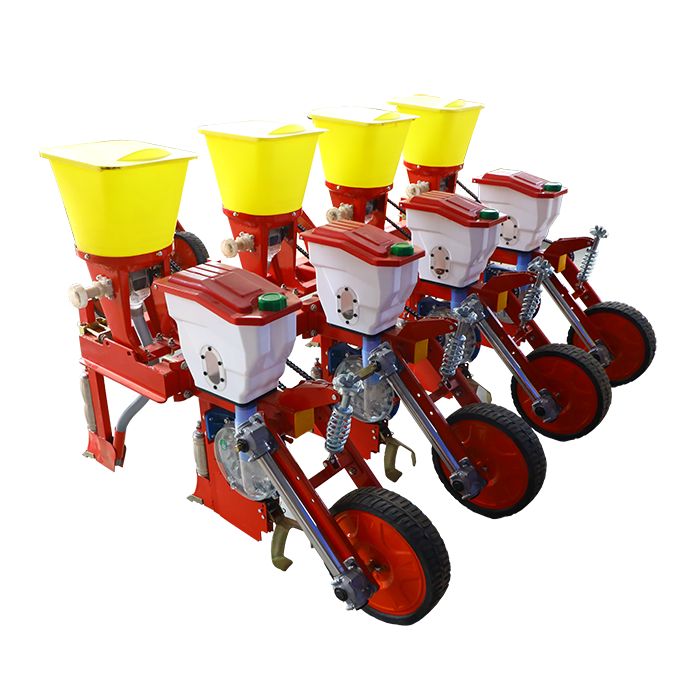
The following key specifications represent common industry-standard parameters for a high-grade corn seeder:
| Parameter | Specification | Description |
|---|---|---|
| Row Spacing | 300–750 mm adjustable | Allows compatibility with diverse agronomic requirements and field configurations |
| Seed Metering Precision | ±2–3% deviation | Stabilizes uniform seed distribution with minimal skips or doubles |
| Working Width | 2–6 meters (depending on model) | Influences operational efficiency and field coverage per hour |
| Planting Depth Range | 30–80 mm adjustable | Supports root establishment across different soil textures |
| Hopper Capacity | 20–60 L per row | Reduces frequency of refills and facilitates extended field operations |
| Operation Speed | 4–12 km/h | Helps match power output of tractors for continuous and efficient planting |
| Power Requirement | 40–120 HP | Defines tractor compatibility for small, medium, or large farms |
| Fertilizer Integration | Optional dual-delivery system | Enables synchronized seed and nutrient placement |
Mechanisms That Determine Precision in Corn Planting
The modern corn seeder is designed around four primary subsystems: seed metering, trenching, seed placement, and seed covering. Each subsystem must operate with synchronized accuracy to ensure optimal conditions for crop emergence.
Seed Metering System
The metering system regulates the release of individual seeds at predetermined intervals. Precision is influenced by metering plate shape, vacuum suction strength (for pneumatic metering), and row-unit vibration stability. High-grade meters maintain a deviation rate below ±3%, absorbing field irregularities without compromising planting uniformity.
Trenching and Seed Placement
Trench openers penetrate the soil at controlled depths while maintaining consistent furrow geometry. Depth-control wheels and downforce systems counteract soil resistance, enabling uniform root-zone conditions. Seed tubes reduce seed bounce, ensuring accurate placement at the designated position within the furrow.
Seed Covering and Soil Consolidation
Closing discs and press wheels seal the furrow and enhance soil compaction around the seed. This maximizes seed-to-soil contact, preserves moisture, and strengthens the environmental conditions required for germination.
Operational Efficiency
A corn seeder’s efficiency stems from its ability to maintain high planting speed while preserving accuracy. The combination of adjustable row spacing, advanced metering, and durable ground-engaging components minimizes downtime and increases field productivity per operational cycle.
Comparison Across Different Agricultural Environments
Users often evaluate how efficiently a corn seeder adapts to varying soil textures, farm sizes, and operational logistics. The following aspects illustrate its versatility across diverse environments:
Soil Variability
Clay-rich soils, sandy loam, and high-residue fields demand adaptable downforce systems. Adjustable downforce ensures trench integrity, preventing shallow placement or excessive compaction. Seeders with pneumatic downforce offer real-time adjustments based on soil resistance readings.
Field Size and Machinery Scalability
Small- and medium-sized farms benefit from models with two to four rows, offering lower power requirements and easier maneuverability. Large commercial farms prioritize wider working widths and high-capacity hoppers to maintain operational continuity across hundreds of hectares.
Planting Schedules
In regions with narrow planting windows, seeders with extended working widths and high planting speeds are favored for their ability to cover substantial acreage within limited time. Environmentally controlled planting also influences decisions, especially in areas with unpredictable moisture patterns.
Crop Rotation Considerations
Farmers practicing rotation with soybeans, sorghum, or wheat require seeders that offer interchangeable metering plates and adjustable row spacing. This flexibility reduces equipment redundancy and supports diverse cropping strategies.
Key Factors Influencing Long-Term Performance and Maintenance
Ensuring long-term operational performance requires attention to wear-resistant components, maintenance accessibility, and engineering design:
Component Durability
Seed meters, opener discs, and bearings should be fabricated from corrosion-resistant alloys or hardened steel. Abrasion resistance determines replacement cycles, especially in fields with high sand content.
Hopper System and Flow Reliability
Hopper geometry affects seed flow consistency. Smooth internal walls prevent bridging, ensuring stable flow even with irregular seed shapes or treatments. Maintenance-friendly hoppers promote fast cleaning and reduce downtime during seed variety changes.
Row-Unit Suspension
Row-unit parallel linkage design ensures stable ground following on uneven surfaces. Systems with dampers or spring-assisted mechanisms reduce vertical oscillation and protect seed spacing accuracy.
Compatibility with Tractors
Power requirement matching avoids overload and ensures stable machine performance. Appropriate PTO output, hydraulic flow rate, and hitch category compatibility are essential considerations.
Calibration Protocols
Routine calibration of meters and depth settings ensures reliable precision. Seed rates should be validated before entering the field, and metering plates must be inspected for debris or erosion that could affect accuracy.
Future Development Trends in Corn Seeding Technology
The agricultural machinery industry is witnessing rapid technological evolution in response to labor shortages, climate variability, and stricter sustainability expectations. Several major trends are shaping future innovation:
Automated Variable-Rate Planting
Variable-rate planting technology modulates seed density based on field nutrient zones, moisture levels, and yield maps. This maximizes seed investment by distributing resources according to agronomic potential.
Real-Time Soil Monitoring
Integrating soil sensors into the seeder frame enables continuous measurement of moisture, temperature, and compaction during operation. These data inform adaptive planting decisions to improve germination reliability.
Smart Connectivity
Telematics systems provide remote monitoring of machine performance, planting progress, and diagnostics. Cloud-based data exchange supports planning, maintenance scheduling, and yield analytics.
Sustainability-Focused Engineering
Manufacturers are investing in components that reduce soil disturbance, increase planting efficiency, and minimize fuel consumption. Lightweight alloys and optimized row-unit designs contribute to sustainable farming practices.
Automation and Autonomous Navigation
Autonomous guidance systems ensure linear accuracy on irregular terrain. Autonomous seeders reduce reliance on labor and improve planting consistency across extended work hours.
Common Questions About Corn Seeders
Q: How does a corn seeder ensure uniform seed spacing in real-world field conditions?
A: Uniform seed spacing is achieved through precision metering mechanisms, vibration-stabilized row units, and optimized seed tubes that reduce bounce. Depth-control wheels maintain consistent furrow depth, while synchronized ground-speed monitoring ensures that metering intervals remain stable despite terrain variation.
Q: What type of maintenance schedule is required to keep a corn seeder performing at peak accuracy?
A: Regular maintenance includes inspection of metering plates for wear, lubrication of bearings, cleaning of hopper interiors, adjustment of opener discs, and calibration of depth-control wheels. Seasonal storage requires protective coatings for metal components and thorough removal of residues or seed treatments to prevent corrosion.
A corn seeder is a critical asset for farms seeking enhanced planting accuracy, operational efficiency, and long-term production stability. Through precision metering, adaptive row-unit engineering, and configurable planting parameters, the machine supports consistent germination and optimized field performance. With advancing trends such as variable-rate planting, autonomous navigation, and integrated soil analytics, the role of the corn seeder continues to evolve in modern agriculture. For growers seeking a high-performance solution built for durability and precision, the Harvester brand provides advanced engineering and reliable product support. To discuss specifications, configuration options, or procurement details, contact us for professional assistance.