

How Do Rockwool Seedling Blocks Compare to Peat or Coco Coir for Seedling Health
2026-04-14
When starting seeds or nurturing cuttings, the growing medium directly determines root vigor, moisture balance, and disease resistance. Among modern options, Rockwool Seedling Block stands out alongside traditional peat and coco coir. Xirangyuan has extensively tested these substrates to help growers make data-driven choices for optimal seedling health.
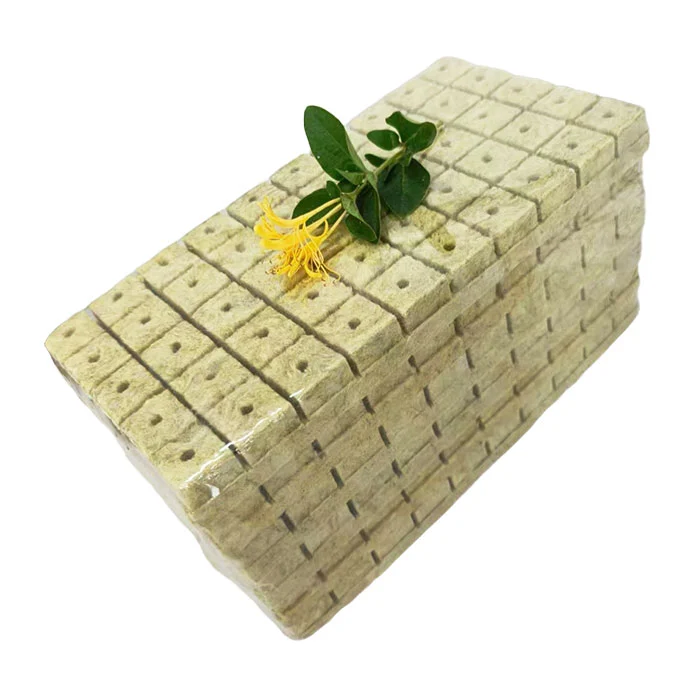
Key Comparison: Rockwool Seedling Block vs. Peat vs. Coco Coir
| Feature | Rockwool Seedling Block | Peat | Coco Coir |
|---|---|---|---|
| Water holding capacity | Moderate (60-70%) | High (80-90%) | Moderate (65-75%) |
| Air porosity | Excellent (30-40%) | Low (10-15%) | Good (20-25%) |
| pH stability | Neutral (7.0) – requires pre-soaking | Acidic (4.0-5.5) – needs lime | Slightly acidic (5.5-6.5) |
| Sterility | Sterile – no pathogens or weed seeds | May contain fungi or insects | Often contains trichoderma (beneficial but variable) |
| Reusability | Not recommended | Limited | Can be reused after washing |
| Decomposition | Non-biodegradable | Slow degradation | Moderate degradation |
Why Seedling Health Depends on Medium Choice
Healthy seedlings require balanced oxygen and water around roots. Rockwool Seedling Block provides 30-40% air porosity, preventing waterlogging and damping-off disease. Peat retains excessive water, often suffocating delicate roots. Coco coir offers decent drainage but may contain high salts if not properly buffered. Xirangyuan trials show that Rockwool Seedling Block reduces fungal infection rates by nearly 50% compared to peat, thanks to its sterile, inert nature.
Three Critical Factors for Root Development
-
Pathogen Control – Rockwool Seedling Block arrives pathogen-free, while peat often carries Pythium or Fusarium spores. Coco coir quality varies significantly between suppliers.
-
Nutrient Management – Rockwool Seedling Block has no inherent nutrients, giving growers full control. Peat and coco coir release variable organic compounds that can interfere with nutrient uptake.
-
Transplant Success – Roots from Rockwool Seedling Block transplant without shock because the block holds structure. Peat pellets disintegrate easily, and coco coir compresses when handled.
Rockwool Seedling Block FAQ – Common Questions
Q: Does Rockwool Seedling Block need special preparation before sowing seeds?
A: Yes. Rockwool Seedling Block has a natural pH of 7.0-7.5, which is too high for most seedlings. Soak the block in pH 5.5-6.0 water for 30-60 minutes before use. This step neutralizes alkalinity and ensures optimal nutrient availability. Xirangyuan recommends using reverse osmosis water with a calibrated pH meter for consistent results.
Q: How often should I water seedlings in Rockwool Seedling Block compared to peat or coco coir?
A: Rockwool Seedling Block retains less water than peat but more air. Water every 2-3 days when the block feels light and the bottom is slightly moist. Peat requires water every 4-5 days but risks root rot. Coco coir needs watering every 2-4 days depending on humidity. Always lift a block to check weight rather than following a fixed schedule.
Q: Can I reuse Rockwool Seedling Block for a second growing cycle?
A: Reusing Rockwool Seedling Block is not recommended for seedling health. Old blocks accumulate salts, root debris, and potential pathogens. Unlike peat or coco coir, Rockwool Seedling Block cannot be effectively sterilized at home without specialized equipment. Xirangyuan advises using fresh blocks for each propagation cycle to prevent disease transfer and ensure uniform germination.
Best Practices for Superior Seedling Health
Xirangyuan emphasizes that no single medium fits all situations. For crops prone to root diseases (tomatoes, peppers, cucumbers), Rockwool Seedling Block provides the cleanest start. For water-sensitive herbs (basil, cilantro), coco coir works well but requires buffering. Peat remains useful only when cost is the sole concern and disease pressure is low.
Final Verdict from Xirangyuan
For commercial or serious home growers prioritizing seedling health, Rockwool Seedling Block outperforms peat and coco coir in sterility, air porosity, and transplant success. The need for pH pre-treatment is a minor step compared to the benefits of disease-free root zones and consistent growth.
Contact Us
Xirangyuan offers bulk Rockwool Seedling Block samples, technical pH calibration guides, and custom cutting sizes. Reach out today for a free consultation on optimizing your seedling propagation system.