

How Do Loss-In-Weight Scales Contribute To Process Efficiency
2026-01-30
In industries where precise ingredient dosing is critical—from food and pharmaceuticals to plastics and chemicals—consistent product quality and minimal waste are paramount. This is where the Loss-In-Weight Scale becomes a cornerstone of modern manufacturing efficiency. At Gaoxin, we engineer these sophisticated systems to be the intelligent heartbeat of continuous and batch processes, directly driving profitability through unmatched accuracy and control. But how exactly does this technology translate into tangible process efficiency gains? The contribution is multi-faceted and profound.
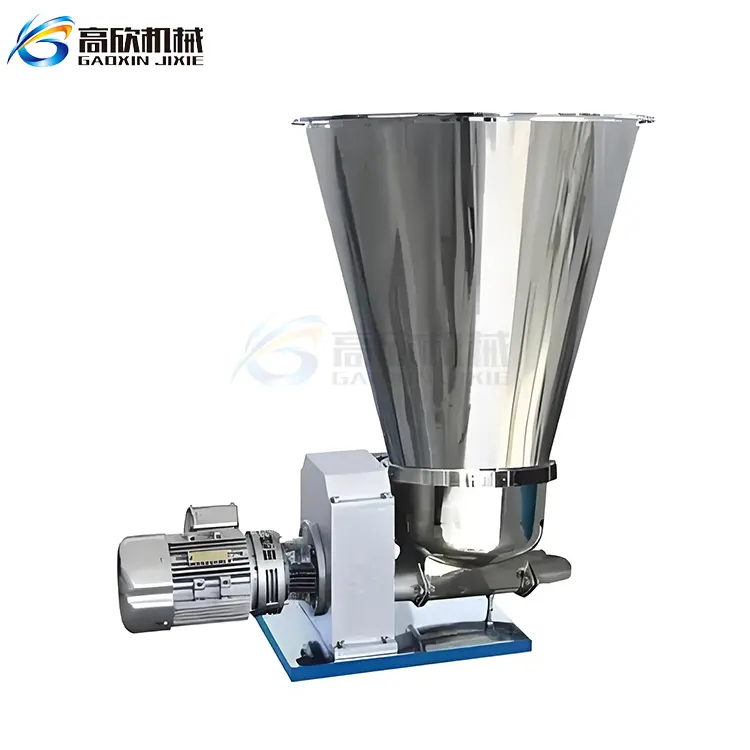
A Loss-In-Weight Scale operates on a deceptively simple principle: it continuously measures the weight loss of a hopper or feeder as material is discharged, using this data to control the discharge mechanism in real-time. This closed-loop control is the key to its benefits, which we can break down into core areas:
-
Unmatched Accuracy & Consistency: By measuring weight directly, it eliminates the variables associated with volumetric feeding (like density changes), ensuring each batch or continuous stream meets the exact recipe specification.
-
Reduced Material Waste: Precise dosing means no giveaway of expensive raw materials. This direct cost saving immediately improves the bottom line.
-
Enhanced Product Quality: Recipe consistency is the foundation of product quality. Eliminating fluctuations in ingredient proportions prevents batch rejections and ensures brand reputation.
-
Automated Process Control: Gaoxin systems integrate seamlessly with PLCs and plant SCADA, reducing manual intervention, operator error, and labor costs.
-
Data for Continuous Improvement: Modern scales provide valuable data logs for production reporting and traceability, essential for quality audits and process optimization.
The following table contrasts the impact of a Loss-In-Weight Scale against less advanced feeding methods:
| Process Aspect | Traditional/Volumetric Feeding | With a Gaoxin Loss-In-Weight Scale |
|---|---|---|
| Dosing Accuracy | Susceptible to material density, flowability changes | High, based on direct mass measurement |
| Material Waste | Typically higher due to overfeeding for safety margins | Minimized through precise control |
| Process Control | Often manual or open-loop | Fully automated, closed-loop control |
| Operational Cost | Higher long-term cost from waste and inconsistencies | Lower total cost of ownership |
Loss-In-Weight Scale FAQ
What types of materials are suitable for a Loss-In-Weight Scale?
Gaoxin Loss-In-Weight Scales are highly versatile and can handle a vast range of materials, from fine powders and cohesive ingredients to granules, flakes, and even small pellets. The key is pairing the system with the correct feeder design (e.g., screw, vibratory tray) and hopper for your material's flow characteristics.
How do you maintain accuracy when refilling the hopper?
During the brief refill cycle, the system switches to volumetric feeding based on the last known accurate rate. Gaoxin controllers are optimized to make this transition seamless and brief, ensuring the overall average feed rate remains extremely accurate and the process is not interrupted.
Can a Loss-In-Weight system handle multiple ingredients?
Absolutely. Multiple Loss-In-Weight Scale units can be configured as a coordinated multi-ingredient batching or continuous blending system. Gaoxin automation solutions provide master control to synchronize multiple feeders, ensuring perfect recipe ratios are maintained throughout production.
Implementing the right weighing technology is a strategic decision that reverberates through every aspect of your production line's performance. A Gaoxin Loss-In-Weight Scale is more than just a feeder; it is an investment in precision, reliability, and sustainable efficiency that pays dividends through superior quality and reduced operational costs.
Ready to optimize your process efficiency with precision weighing? Contact us today to speak with a Gaoxin engineering specialist about your application.