

How Can Pig Feeder Selection Account for Different Pig Housing Systems?
2026-11-12
A farm manager orders the same Pig Feeder model for a new gestation barn and a new group housing barn. Six months later, the gestation barn reports normal feed intake and clean troughs. The group housing barn reports feed waste, aggressive competition at the feeder, and two feeder lids broken. The feeder model is identical. The housing system is not. Gestation stalls give each sow a fixed position and a fixed feed drop. Group housing gives sows freedom to move, to compete, and to choose when to eat. A feeder that works in one system can fail in the other. This guide explains how pig feeder selection should be matched to the housing system rather than chosen from a catalog alone.
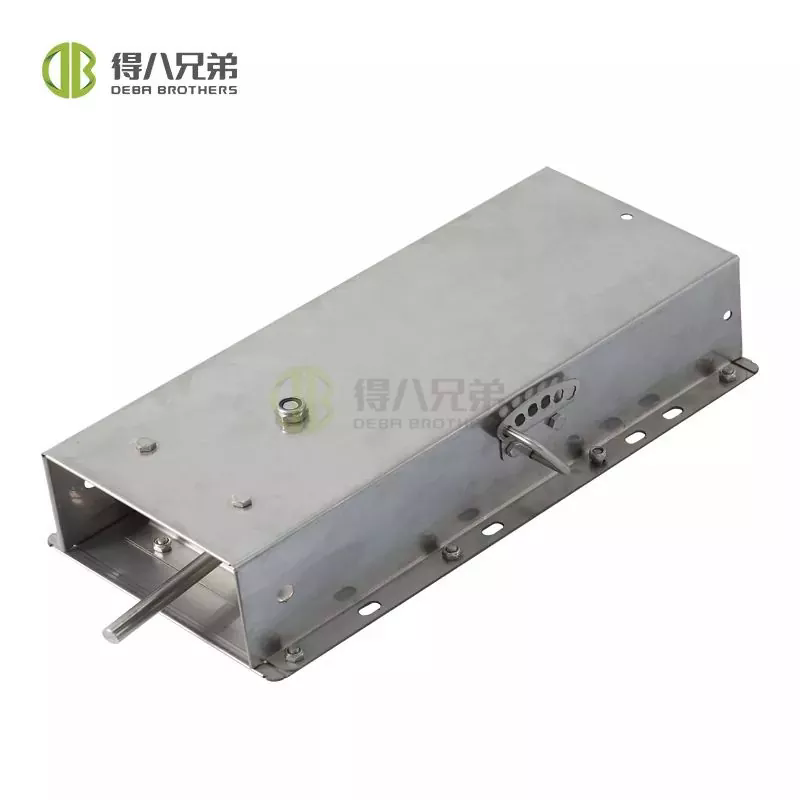
1. Why Does the Same Feeder Behave Differently in a Stall Barn and a Group Pen?
In a gestation stall barn, each sow stands in a individual stall. The feeder is mounted at the front of the stall, and the sow eats from a fixed position. There is no competition for the feed, because each sow has her own feeder space. In a group pen, the sows share the floor area and the feeder. The dominant sows eat first and eat more, and the subordinate sows may not get enough. The feeder must be designed to reduce competition, either by providing multiple feeding spaces, by using a slow feeding mechanism, or by using an electronic sow feeder that recognizes each sow. In our factory, we manufacture Pig Feeder units for stall barns, group pens, nursery rooms, and finishing barns. Qingdao DEBA Brother Machinery Co.,Ltd. has been manufacturing swine equipment for over 12 years.
The difference is not only in the feeder. It is in the management system that the feeder supports. A stall barn feeder is part of a controlled feeding program. A group pen feeder is part of a social feeding environment. The buyer should describe the housing system, the group size, and the feeding strategy before selecting the feeder model.
2. Which Feeder Types Match the Main Swine Housing Systems?
There are four main housing systems, and each requires a different feeder type. The gestation stall system uses a front mounted trough feeder with a manual or automatic drop. The group housing system uses a large capacity hopper feeder with multiple eating spaces, or an electronic sow feeder. The nursery system uses a small creep feeder with a low trough height. The finishing system uses a dry wet feeder or a stainless steel trough feeder. The table below summarizes the feeder type for each system.
| Housing system | Typical feeder type | Eating spaces per feeder | Key selection parameter |
| Gestation stall | Front mounted trough feeder | 1 per stall | Trough depth and drop accuracy |
| Group housing | Multi space hopper or electronic sow feeder | 4 to 8 per feeder | Competition control and feed curve |
| Nursery | Creep feeder with low trough | 6 to 10 per feeder | Trough height and feed particle size |
| Finishing | Dry wet feeder or stainless trough | 4 to 6 per feeder | Water flow and trough drainage |
In our factory, we supply all four feeder types and we provide a selection guide that maps the housing system to the feeder specification. Qingdao DEBA Brother Machinery Co.,Ltd. reviews the pen layout and the group size with the customer before recommending a model.
3. How Do Pen Layout and Group Size Decide the Number of Feeding Spaces?
The number of feeding spaces is determined by the group size and the feeding behavior of the pigs. In a group housing pen with 60 sows, a feeder with 6 eating spaces provides a ratio of 10 sows per space. This ratio is too high for a conventional hopper feeder because the dominant sows will occupy the spaces and the subordinate sows will not get enough feed. A ratio of 4 to 6 sows per space is more suitable for a conventional multi space feeder. An electronic sow feeder can serve a larger group because it controls the intake of each sow individually. The table below shows the recommended feeding space ratio for different feeder types and pig categories.
| Feeder type | Pig category | Recommended pigs per space | Typical group size |
| Multi space hopper | Gestating sows | 4 to 6 | 20 to 40 |
| Multi space hopper | Finishing pigs | 5 to 8 | 30 to 60 |
| Creep feeder | Nursery pigs | 6 to 10 | 20 to 40 |
| Electronic sow feeder | Gestating sows | 40 to 60 per station | 40 to 60 |
Swine equipment specialist's note: The feeding space ratio is the most common cause of poor body condition in group housed sows. A feeder that looks adequate on the catalog sheet may be too small for the actual group size. In our factory, we recommend that the buyer calculate the ratio from the group size and the feeder capacity, and that the buyer observe the sows at the feeder during the first week after installation. Qingdao DEBA Brother Machinery Co.,Ltd. provides a pen layout drawing with the recommended feeder positions.
4. Why Do Material Thickness and Surface Treatment Matter More in Some Housing Systems?
The housing system determines the environment that the Pig Feeder is exposed to. A gestation stall barn is relatively dry and the feeder is not exposed to urine and wash water. A group housing pen with a slatted floor is wetter, and the feeder is exposed to urine, manure, and daily wash down. A finishing barn with a dry wet feeder is exposed to water at the trough. A nursery room is warm and humid. The feeder material must resist corrosion in each environment. The common materials are galvanized steel, stainless steel 304, and stainless steel 316. The table below shows the recommended material for each housing system.
| Housing system | Recommended material | Typical sheet thickness | Expected service life |
| Gestation stall | Galvanized steel | 1.0 to 1.2 mm | 8 to 10 years |
| Group housing, slatted floor | Stainless steel 304 | 1.2 to 1.5 mm | 12 to 15 years |
| Nursery room | Stainless steel 304 | 1.0 to 1.2 mm | 10 to 12 years |
| Finishing barn, dry wet feeder | Stainless steel 316 | 1.5 to 2.0 mm | 15 to 20 years |
In our factory, we use a continuous galvanized coil for the stall barn feeders and a laser welded stainless steel sheet for the group housing and finishing feeders. We also apply a smooth surface finish to the trough to reduce feed sticking and to make cleaning easier. Qingdao DEBA Brother Machinery Co.,Ltd. provides the material certificate and the coating thickness report with each shipment.
5. How Should Buyers Verify That a Feeder Matches Their Housing System?
The verification should include four steps. The first is a review of the pen layout drawing, which shows the feeder position, the feeding space, and the traffic flow. The second is a review of the feeder specification, which shows the material, the thickness, the trough depth, and the capacity. The third is a site visit or a video review of a similar installation. The fourth is a trial with a small group of pigs before the full order is placed. In our factory, we provide a trial feeder for the customer to test in the actual barn. We also provide a maintenance schedule that includes the inspection of the trough edge, the feed drop mechanism, and the lid hinges. Qingdao DEBA Brother Machinery Co.,Ltd. recommends that the buyer check the feeder after the first month of use and adjust the feed drop or the space ratio if the pigs show signs of competition or feed waste.
We recommend that the buyer not select a feeder based on the price per unit alone. The cost of poor feeder selection shows up later as feed waste, poor body condition, and higher labor for cleaning and maintenance. A feeder that matches the housing system will pay for itself through better feed conversion and lower labor.
Frequently Asked Questions About Pig Feeder Selection and Housing Systems
Summary for Pig Producers and Equipment Buyers
Pig Feeder selection must account for the housing system, because the same feeder model can perform well in one system and poorly in another. The gestation stall system requires a front mounted trough feeder with individual feed control. The group housing system requires a multi space hopper or an electronic sow feeder with competition control. The nursery system requires a creep feeder with a low trough. The finishing system requires a dry wet feeder with corrosion resistant material. The feeding space ratio and the material thickness determine the long term performance. The buyer should verify the feeder against the pen layout, the group size, and the barn environment before placing the order. Qingdao DEBA Brother Machinery Co.,Ltd. has been manufacturing Pig Feeder units for over 12 years and provides full housing system matching and verification support for our customers.