

Can Ultrafiltration Equipment Remove Viruses and Heavy Metals from Drinking Water
2025-12-29
When selecting a water purification system for your home, understanding its precise capabilities is crucial. A common and critical question we encounter at Jingbo is about the effectiveness of Drinking Water Ultrafiltration Equipment against specific contaminants like viruses and heavy metals. This article provides a clear, professional analysis to guide your decision, leveraging Jingbo's expertise in advanced filtration technologies.
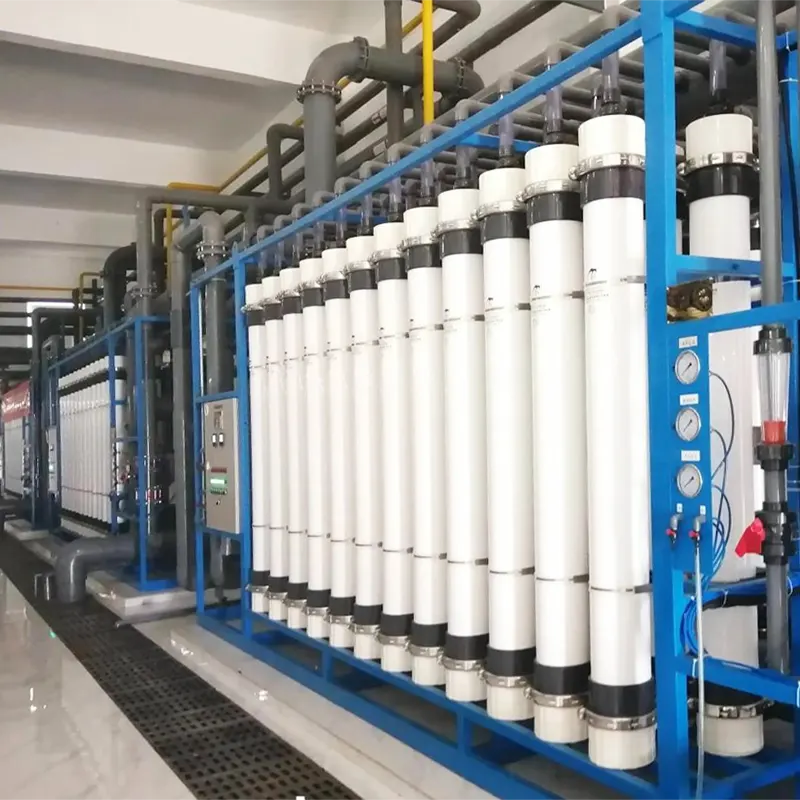
The Core Mechanism: How Ultrafiltration Works
Ultrafiltration (UF) is a membrane-based filtration process. It uses a semi-permeable membrane with a pore size typically rated at 0.01 to 0.1 microns. Water is forced through this membrane under pressure, physically screening out particles larger than the pores.
Contaminant Removal: A Detailed Breakdown
-
Viruses (Size: 0.02 - 0.1 microns): Most viruses are larger than the pore size of a standard UF membrane. Therefore, a high-quality UF system is highly effective at removing bacteria and most viruses through size exclusion, providing a significant barrier to waterborne pathogens.
-
Heavy Metals (Size: ~0.0001 - 0.001 microns): Here lies the distinction. Individual heavy metal ions (like lead, arsenic, mercury) are much smaller than UF pores. A standard UF membrane cannot remove dissolved ionic heavy metals by size alone.
| Contaminant Type | Typical Size | Removed by Standard UF? | Key Mechanism |
|---|---|---|---|
| Sediment, Rust | >1 micron | Yes | Mechanical Sieving |
| Bacteria | 0.2 - 10 microns | Yes | Mechanical Sieving |
| Most Viruses | 0.02 - 0.1 microns | Yes | Mechanical Sieving |
| Heavy Metal Ions | ~0.0001 - 0.001 microns | No | Too small for pores |
The Jingbo Solution: Enhanced Protection
Recognizing this, Jingbo integrates ultrafiltration membranes with pre-filtration and activated carbon blocks in our systems. The activated carbon is specially formulated to adsorb dissolved heavy metals and chemicals, while the UF membrane provides the final barrier for pathogens. This multi-stage approach ensures comprehensive safety.
FAQ: Drinking Water Ultrafiltration Equipment
Q: Does ultrafiltration require electricity or produce wastewater?
A: Most point-of-use Jingbo UF systems operate using normal water pressure, requiring no electricity. They also produce minimal to no wastewater, unlike reverse osmosis systems, making them an efficient and eco-friendly choice.
Q: How often do I need to replace the ultrafiltration membrane?
A: The UF membrane in a Jingbo system typically lasts 12-24 months, depending on inlet water quality and usage. Our systems feature clear indicators for timely replacement, ensuring consistent performance.
Q: Can I install a Jingbo ultrafiltration system myself?
A: Yes. Jingbo designs its Drinking Water Ultrafiltration Equipment for straightforward DIY installation under most kitchen sinks, with standard fittings and comprehensive instructions. For complex plumbing, professional installation is recommended.
Ensure Complete Water Safety with Jingbo
While standalone UF excels at pathogen removal, comprehensive protection against both biological and chemical threats requires a integrated system. Jingbo's engineered solutions combine superior ultrafiltration with targeted adsorption media, delivering water that is not just clear, but truly clean and safe for your family.
Ready to transform your tap water? Contact us today for a personalized consultation. Our experts will help you choose the perfect Jingbo filtration system to meet your specific water quality needs.