

What Are the Key Benefits of Using Micro Sprinklers for Large-Scale Farmland Irrigation?
2026-03-04
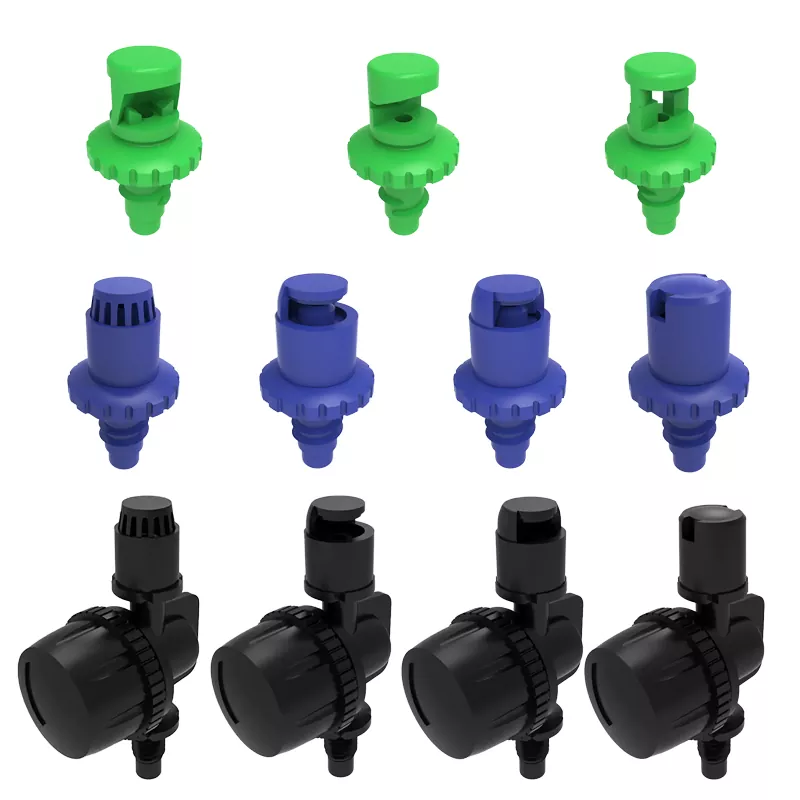
Efficient water management is a top priority for commercial growers operating across extensive acreage. In large-scale farmland irrigation, uniform water distribution, reduced evaporation loss, and energy savings directly influence crop yield and operating margins. Micro sprinkler Sprayers are widely adopted in orchards, vineyards, row crops, and vegetable plantations because they deliver controlled droplets at low pressure while maintaining consistent coverage.
Compared with traditional overhead impact sprinklers or flood irrigation systems, Micro sprinkler Sprayers operate within low-flow ranges, typically between 20 to 120 liters per hour, enabling precise soil moisture management. This precision is especially critical in sandy soils, loamy farmland, and sloped terrain where runoff and nutrient leaching can significantly reduce fertilizer efficiency. By improving infiltration rates and minimizing surface pooling, growers can stabilize root-zone moisture and support uniform plant development across large plots.
At Micro Mist Irrigation Products Co., Ltd., our engineering team focuses on optimizing droplet size, wetted diameter, and pressure compensation performance to ensure our systems meet the needs of modern agribusiness. Our factory integrates automated injection molding and strict flow-rate calibration testing to guarantee field reliability.
How Do Micro Sprinklers Improve Water Efficiency and Reduce Operating Costs?
Water conservation is more than an environmental concern; it is a cost-control strategy. In regions facing seasonal droughts or water allocation limits, efficient irrigation determines planting scale and profitability. Micro sprinkler Sprayers operate at lower working pressure, typically 1.5 to 3.0 bar, which significantly reduces pump energy consumption compared with high-pressure rotor sprinklers.
Because water is delivered closer to the root zone, evaporation loss is minimized. In hot and dry climates, this localized application reduces drift caused by wind and prevents over-spraying. Our systems allow growers to design block-based irrigation zoning, ensuring different crops receive tailored flow rates based on evapotranspiration levels and soil type.
Another major advantage lies in fertigation compatibility. By integrating venturi injectors or dosing pumps, soluble fertilizers can be evenly distributed through the irrigation lines. This increases nutrient uptake efficiency and reduces fertilizer waste. Our design supports stable flow under varying pressure conditions, helping maintain consistent nutrient concentration across long lateral lines.
| Parameter | Standard Range | Application Benefit |
| Flow Rate | 20 to 120 L/H | Precise soil moisture control |
| Working Pressure | 1.5 to 3.0 Bar | Lower pump energy cost |
| Wetted Diameter | 1.5 to 6 Meters | Flexible spacing for orchards and row crops |
| Filtration Requirement | 120 Mesh Recommended | Prevents clogging in long irrigation lines |
| Connection Type | Barb, Threaded, Take-Off | Easy integration into PE lateral pipes |
Our factory conducts flow uniformity testing across pressure variations to ensure coefficient of variation remains within industry standards. This helps large-scale growers maintain predictable irrigation output even under fluctuating supply conditions.
Why Are Micro Sprinklers Ideal for Orchards, Vineyards, and Specialty Crops?
Tree crops and perennial plantations demand targeted irrigation patterns. In orchards, for example, root systems expand outward from the trunk. Micro sprinkler Sprayers create circular or sector-based spray patterns that match canopy development stages. This adaptability reduces water waste during early planting years and expands coverage as trees mature.
Vineyards benefit from controlled soil wetting that avoids excessive humidity near foliage, which can trigger fungal disease pressure. By adjusting installation height and spray angle, growers can protect crop health while maintaining optimal soil moisture. Our design options include anti-insect features and UV-resistant materials, ensuring long service life in open-field conditions.
Micro Mist Irrigation Products Co., Ltd. supports customized solutions based on crop spacing and row width. Our technical team evaluates planting density and regional climate to recommend nozzle types and flow ratings. This consultative approach ensures our clients maximize yield potential while maintaining irrigation efficiency.
| Crop Type | Recommended Flow | Typical Spacing |
| Citrus Orchard | 70 to 100 L/H | 4 to 6 Meters |
| Vineyard | 35 to 70 L/H | 2 to 3 Meters |
| Vegetable Field | 20 to 50 L/H | 1.5 to 2.5 Meters |
| Nursery Plants | 20 to 40 L/H | Customized Layout |
These configurations demonstrate how system flexibility allows adaptation across diverse farming environments. Our engineering philosophy focuses on durability, uniform droplet distribution, and easy maintenance.
How Do Product Design and Manufacturing Standards Impact Long-Term Reliability?
Durability is critical in commercial agriculture. Irrigation components are exposed to UV radiation, fertilizer chemicals, and fluctuating temperatures. Micro sprinkler Sprayers manufactured with high-grade polypropylene and UV stabilizers offer extended field life and resistance to cracking.
Clogging prevention is another key factor. Removable nozzles and self-flushing designs reduce maintenance downtime. Our production lines include precision mold calibration and pressure testing to maintain consistent spray trajectory and flow output.
At Micro Mist Irrigation Products Co., Ltd., quality control extends from raw material inspection to final packaging. Our factory implements batch sampling tests and aging simulations to verify product endurance. By maintaining strict manufacturing standards, our customers experience lower replacement frequency and predictable operational performance.
How Can Large Farms Optimize System Layout for Maximum Irrigation Efficiency?
System planning directly influences irrigation uniformity. On large farmland blocks, lateral pipe length, elevation change, and pump capacity must be carefully calculated. Our technical support team assists with hydraulic design to reduce pressure loss across extended pipelines.
Zoning strategies allow growers to irrigate specific sections based on crop stage and soil moisture monitoring. Integrating soil sensors and automated valves further improves water-use efficiency. Micro sprinkler Sprayers can be installed on stakes or suspended from lateral lines depending on crop type and cultivation method.
Proper filtration is essential to prevent sediment accumulation. Installing screen or disc filters upstream ensures stable performance and protects internal channels from blockage. Our design recommendations emphasize system compatibility and ease of expansion for future acreage growth.
FAQ
Q1: What Are the Key Benefits of Using Micro Sprinklers for Large-Scale Farmland Irrigation?
The key benefits include improved water-use efficiency, reduced evaporation loss, lower energy consumption, and better nutrient distribution through fertigation. These systems provide uniform soil moisture across large acreage while minimizing runoff and erosion. Their adaptability to orchards, vineyards, and row crops makes them suitable for diverse agricultural operations.
Q2: What Are the Key Benefits of Using Micro Sprinklers for Large-Scale Farmland Irrigation in Drought-Prone Regions?
In drought-prone regions, the main advantages are precise root-zone application and reduced water waste. Because they operate at low flow rates and low pressure, growers can extend irrigation duration without exceeding water allocation limits. This helps maintain crop stability during dry seasons while controlling pumping costs.
Q3: What Are the Key Benefits of Using Micro Sprinklers for Large-Scale Farmland Irrigation Compared with Flood Irrigation?
Compared with flood irrigation, these systems significantly reduce water consumption and prevent nutrient leaching. Flood methods often result in uneven distribution and soil erosion. In contrast, controlled droplet application ensures consistent coverage, improved fertilizer efficiency, and reduced weed growth between rows.
In summary, micro irrigation technology offers measurable benefits for commercial farming operations seeking water efficiency, crop consistency, and long-term cost control. By combining engineered spray precision, durable materials, and adaptable layout design, our solutions help large-scale growers achieve sustainable production. Contact our team today to learn how our factory can support your next irrigation project with reliable performance and customized system planning.