Substantial Flour Processing Machine Solutions for High-Capacity Milling
2026-09-22
What separates a flour mill that consistently hits 500 tons per day from one that stalls at half that? It rarely comes down to luck. High-capacity milling depends on processing machinery built for sustained, heavy-duty throughput—not just bigger motors, but smarter integration at every stage. In this post, we’ll look at the essentials behind substantial flour processing machine solutions and why so many large-scale operations turn to PINGLE when output targets start climbing.
Matching Mill Capacity to Actual Demand Instead of Guesswork
Overbuilt mills often run below true demand because operators lean on historical averages or gut feel rather than live order data. This gap shows up as idle spindles, excess energy draw, or hurried overtime when a real spike arrives. Instead of smoothing production with rough forecasts, connect mill output directly to downstream pull signals—daily order tallies, warehouse depletion rates, or even point-of-sale trends for finished goods. Once the mill’s hourly throughput is tuned to these actual consumption numbers, the guessing loop disappears and every kilowatt goes toward product someone is waiting to buy.
A practical way to start is by comparing nameplate capacity against the rolling seven-day demand curve, not the annual plan. If the mill can theoretically process 12 tonnes per shift but receiving docks only request 8 tonnes on average, running at full tilt simply piles up inventory that ties up cash and floor space. Introduce a feedback trigger: when order backlog drops below a set threshold, automatically scale back mill speed or reduce shift length; when backlog climbs, bring idle capacity online in controlled steps. This turns the mill into a demand-responsive unit rather than a fixed-rate machine.
The payoff goes beyond cost savings. Mills that match output to real demand experience fewer emergency changeovers, less product obsolescence, and a more stable labor schedule. Operators stop chasing a monthly quota that nobody actually needs, and management finally sees true utilization rates instead of inflated figures. Over time, the mill’s capacity plan becomes a living document—adjusted weekly based on actual pull, not on the loudest assumption in the room.
Why Roller Gap Precision Matters More at High Throughput
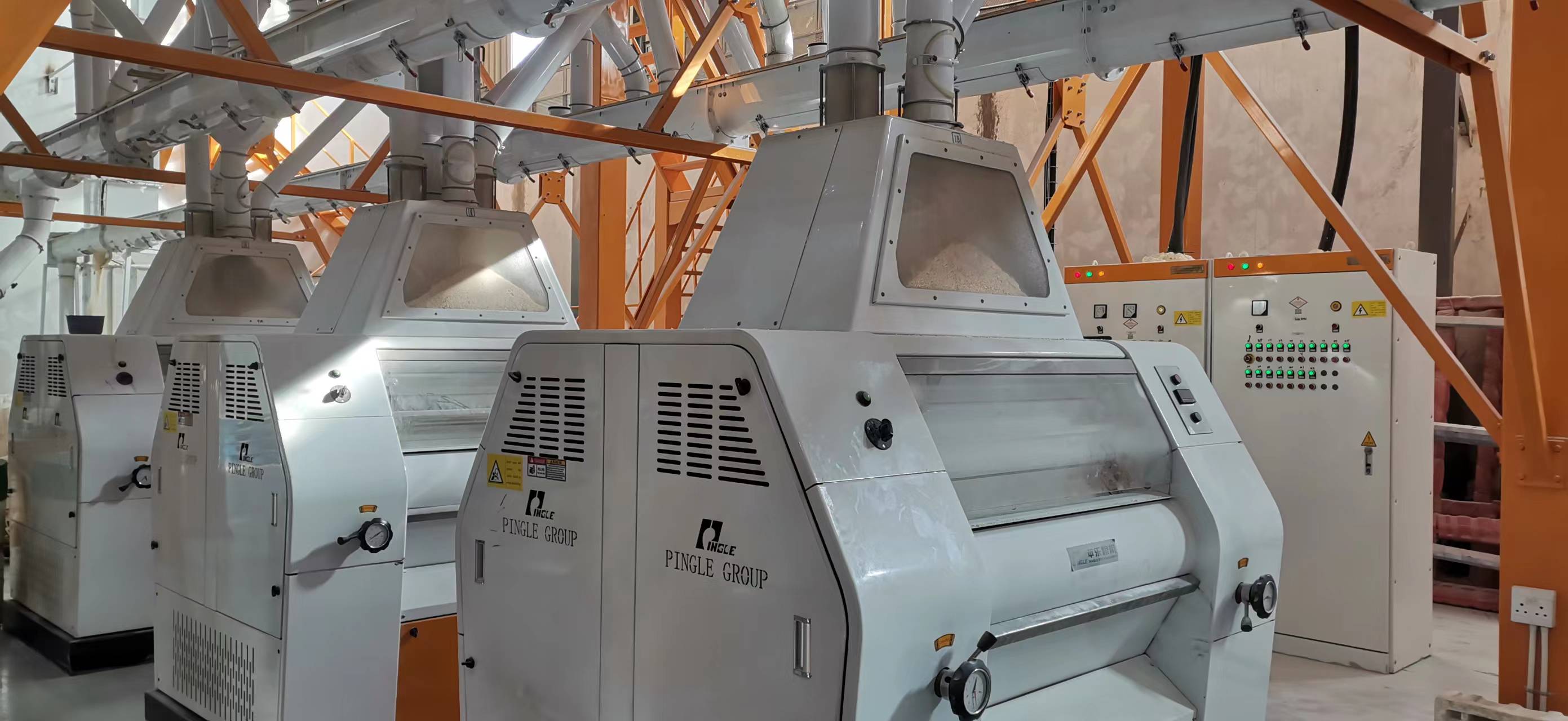
At high line speeds, the material spends far less time inside the nip, so any inconsistency in the gap has almost no chance to be evened out downstream. A deviation of a few hundredths of a millimeter that might be tolerable at 40 m/min becomes a continuous streak of thickness variation at 300 m/min because the same control delay now corresponds to a much longer finished length. Roll dynamics also change sharply: eccentricity, bearing play, and thermal expansion no longer behave as slow shifts but turn into high-frequency disturbances that directly modulate the gap in sync with roll rotation.
The real cost is not just the average gap setting but its stability under load. With higher throughput, feedback correction cycles operate on a fixed time basis, while the product advances faster, meaning a single uncorrected excursion can spoil hundreds of meters before any adjustment takes effect. That makes precise initial roller gap setup and compensation for deflection or thermal growth a prerequisite for keeping waste low. In short, precision matters more because speed multiplies both the spatial impact of a small error and the amount of material exposed to that error before it is detected.
Bulk Handling Systems That Don't Choke Under Pressure
The difference between a smooth-running bulk line and a daily bottleneck often comes down to how the system handles material under load. Hoppers with steep valley angles and low-friction liners keep powders and wet aggregates moving, while carefully sized discharge outlets prevent the sort of bridging that stalls an entire shift. Add in mass-flow designs that pull from the full cross-section, and you avoid the ratholing that lets stagnant material harden against the walls.
Pressure spikes don't have to mean plugging. Air cannons placed at transition points deliver short, sharp bursts that break compacted slugs loose without damaging the structure, and variable-frequency drives on screw feeders let operators match discharge rate to downstream demand instead of forcing material through a fixed opening. The best systems also include sensors that pick up the first signs of a slowdown and trigger gentle vibration before a blockage locks everything up.
Heat Management in Large Grinding Chambers
Heat buildup in large grinding chambers rarely comes from a single source. The motor, the bearings, the air turbulence around the rotor, and even the material being processed all contribute. In a compact chamber, that heat can dissipate quickly through the housing. But scale up the chamber volume by three or four times, and the surface area for heat exchange doesn't grow at the same rate. This leaves engineers with a familiar problem: the core runs hotter than the shell, and thermal expansion starts to become uneven.
One practical approach is to stop treating the chamber as a passive container and start thinking of it as part of the thermal circuit. Forced air through internal channels helps, but only if the air actually reaches the deepest sections. Some designs use a secondary coolant loop embedded in the chamber walls, which works well until you need to disassemble the unit quickly for cleaning. A simpler trick is to increase the mass of the end plates or add ribbing on the exterior—these shifts move heat away from the rotor shaft without adding moving parts.
Material choice matters more than most manuals admit. A stainless steel chamber holds heat longer than an aluminum one, but aluminum warps at lower temperatures and loses clamping force faster. Hybrid designs—steel liners inside an aluminum housing—can balance the two, though they cost more to machine. In the end, good heat management is less about finding one perfect solution and more about understanding where the temperature gradient actually forms after the machine runs for six hours straight.
Sifting Efficiency When Tons Move Through Every Hour
When material streams surge past the fifty-ton-per-hour mark, screen performance stops being a matter of simple vibration settings. The real bottleneck rarely shows up in spec sheets—it hides in the way particles crowd the deck, bounce off each other, and rush toward discharge before finer grains ever get a chance to fall through. Operators who chase higher throughput by cranking up amplitude often discover that blinding worsens, pegging increases, and the actual percentage of correctly sized product drops even as the feed rate climbs.
A more grounded approach starts with matching screen angle and stroke to the material's bulk density and moisture content, not to a generic equipment manual. For dry, free-flowing ores, a slightly steeper deck keeps the bed from stacking too deep, but push it too far and the material skates across without stratifying. Wet or clay-heavy feeds demand a completely different rhythm—lower frequency, larger throw, and sometimes a ball deck or heated mesh just to keep the openings clear. The real skill is reading the discharge pattern: if the material at the far end still looks thick and slow, the screen is simply acting as a conveyor wearing a sieve costume.
Finally, throughput numbers mean nothing without a matching measurement of efficiency. Running a screen at 120 tons per hour with 30% of the fines riding over the end doesn't beat running at 90 tons per hour with 95% passing through. Smart operations track both curves together and adjust on the fly—changing feed distribution, swapping mesh sizes for the actual cut point, and accepting that sometimes the fastest way to move more good product is to slow the raw feed down just enough to let the screen do its real job.
Turnkey Lines vs. Custom-Built Solutions for Expanding Mills
Mill owners weighing expansion often fixate on upfront numbers, but the real divergence between turnkey lines and custom-built solutions lies in how each handles the messy reality of an operating plant. A turnkey package arrives with pre-engineered modules, standard interfaces, and a vendor who shoulders integration risk. For a facility that cannot afford prolonged downtime or lacks deep in-house engineering, that predictability carries genuine weight. Yet it also locks you into another company's assumptions about your feedstock, layout, and future product mix.
Custom approaches, by contrast, start from your existing bottlenecks rather than a catalog. Maybe your roller mill is fine but the sifting and pneumatic conveying are strangling throughput. A bespoke line can surgically replace those segments, reuse your best assets, and leave room for a second phase without ripping out what already works. The trade-off is time and internal effort: you need people who can pin down specifications, challenge vendor drawings, and manage commissioning without pointing fingers when something doesn't align.
The smartest decisions rarely fall purely on one side. Several recent expansions have blended both, buying a largely turnkey cleaning and tempering front end while custom-building the mill flow around proprietary break release curves. That hybrid model keeps critical knowledge inside the plant and still gets you operational in months rather than years. Ask not which option is cheaper on paper, but which one leaves you with a line your own team can tune, troubleshoot, and extend five years from now.
FAQ
Most of our substantial installations are engineered for 200 to 500 metric tons per day, and we have configured systems beyond 800 tons for industrial complexes. Actual output depends on wheat hardness, moisture, and target extraction rate, but the frame, roller mills, and sifters are sized to maintain that range without overloading.
The same core line can handle hard, soft, and durum wheat, and it is easily adjusted for maize, rye, and barley. Changing sieves and roll gaps usually takes a single shift, so you are not locked into one raw material.
Instead of continuously running every motor at full speed, the plant uses load-sensing drives and a sequential start-up routine. That typically trims 12 to 18 percent off the energy bill compared to conventional fixed-speed lines of similar capacity.
Yes. We often split the stock after the first and second break passages and install extra purifiers and reduction rolls for low-ash patent flour. For whole meal or high-extraction products, a bypass chute lets you recombine bran and shorts at the desired ratio.
We send a mechanical and electrical team to supervise layout, leveling, and utility connections, then run a gradual load test with your wheat. Operators get on-site training for cleaning, roll adjustment, and control panel diagnostics before handover.
A 300-ton-per-day plant typically needs a main milling hall around 35 by 20 meters with 12 to 14 meters of clear height, plus separate cleaning and packing rooms. We supply foundation load drawings so you can confirm structural requirements early.
Roller mills call for bearing inspection every 1,000 running hours and roll recorrugation around every 2,500 to 3,000 hours depending on wheat hardness. Sifter screens are replaced based on throughput or visual wear, usually every 6 to 8 weeks in continuous operation.
Absolutely. We use standard Modbus or Profibus interfaces for the PLC, and mechanical connections are designed from your silo outlet dimensions and packing scale heights. A site audit before fabrication avoids last-minute adapter work.
Conclusion
Running a high-capacity flour mill means every component has to earn its place. Matching mill capacity to actual demand avoids the costly mistake of installing oversized rollers that idle half the shift or undersized ones that force constant overload. At high throughput, roller gap precision stops being a fine-tuning luxury and becomes the difference between consistent extraction and drifting flour quality. Bulk handling systems need to be built for the relentless flow of grain and intermediate stocks—chutes, elevators, and conveyors that choke under pressure quickly turn a steady line into a stop-start bottleneck.
Heat buildup inside large grinding chambers is another silent killer: without active cooling or airflow design, temperatures climb, starch damage rises, and flour quality drops before anyone notices. Sifting efficiency has to keep pace with tons moving through every hour, or you end up with either contaminated fractions or wasted endosperm. For expanding mills, the choice between turnkey lines and custom-built solutions is rarely black and white—standardized modules speed up installation, but a tailored layout that respects existing building constraints and product mix often pays off faster. The real advantage comes from treating these elements as one integrated system rather than isolated upgrades.
Contact Us
Contact Person: Jiakuo Wu
Email: [email protected]
Tel/WhatsApp: +86-13011566087
Website: https://www.pinglemachine.com